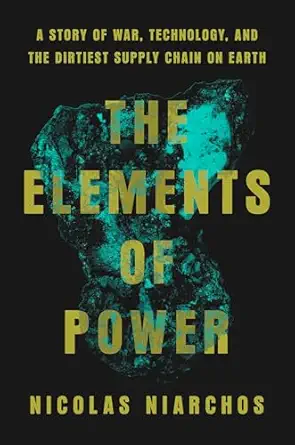
The Elements of Power: The Story of War, Technology, and the Dirtiest Supply Chain on Earth
عناصر القوة: قصة الحرب والتكنولوجيا وأقذر سلسلة توريد على وجه الأرض
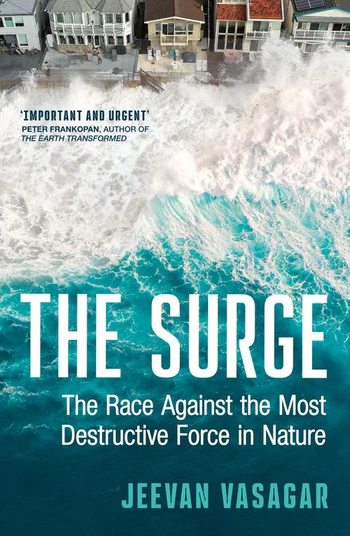
The time has passed when the writer of his article could begin his article by saying, for example, that it does not occur to any of us, while enjoying a certain commodity, that other human beings are suffering in order for him to obtain this pleasure, and that some of his fellow human beings pay with their lives for this pleasure. The time of that innocence, or that innocent ignorance, has passed. I do not think that anyone ignores the fact that we eat and only eat each other’s flesh, and we do not enjoy luxury or service except on the corpses of others among us whose bodies and souls are wasting away while they produce the goods that we have no longer imagined our lives without. Who on earth now does not carry a mobile phone throughout their day whose sense of security and belonging to the world is linked to the energy in its battery? As we watch our phones running out of power, charging them, and consuming them, it may be useful for us to look at a recently published book by American journalist Nicholas Niarchos entitled “Elements of Power: The Story of War, Technology, and the Dirtiest Supply Chain on the Face of the Earth.” Environmental journalist Jeevan Vasagar begins his review of this book (The Observer - February 4, 2026) by saying that mining is a dirty job, with its scraping of mountains, the evisceration of cows, the pollution of soil and rivers, and its devastating environmental impact as it brings death to the men, women and children who descend into the mines, but it is not devoid of a romantic side: “The modern world is made, as if by magic, of Raw materials buried in the ground: steel in buildings, copper in cables, quartz in semiconductors, cobalt and nickel in batteries, and every era of human progress is marked by the extraction of an element: such as bronze, iron, coal, oil, and the elements of the era of renewable energy that we live in now. For decades, oil has been the only commodity that has attracted the attention of the public in a remarkable way, as it has been at the same time the main source of energy in our societies, and a source of [emissions]. Carbon](https://www.independentarabia.com/node/605877/%D8%A7%D9%82%D8%AA%D8%B5%D8%A7%D8%AF/%D8%A3%D8%AE%D8%A8%D8%A7%D8%B1 -%D9%88%D8%AA%D9%82%D8%A7%D8%B1%D9%8A%D8%B1-%D8%A7%D9%82%D8%A A%D8%B5%D8%A7%D8%AF%D9%8A%D8%A9/%D9%83%D9%8A%D9%81-%D8%AA%D8% B3%D9%87%D9%85-%D8%A7%D9%84%D8%B6%D8%B1%D8%A7%D8%A6%D8%A8-%D9 %81%D9%8A-%D8%AA%D9%82%D9%84%D9%8A%D9%84-%D8%A7%D9%86%D8%A8%D 8%B9%D8%A7%D8%AB%D8%A7%D8%AA-%D8%A7%D9%84%D9%83%D8%B1%D8%A8%D 9%88%D9%86-%D9%85%D9%86-%D8%A7%D9%84%D8%B0%D9%83%D8%A7%D8%A1) Which increases the temperature of the planet,” he added, “but in recent years, books have come to shed light on other raw materials that sustain our societies, and positions on trade and the flow of goods have changed in science, and those who look back a decade or two will find importing gas from Russia, rare earth metals from China, and oil trade in global markets a completely acceptable practice, but now China threatens to stop supplies of rare earth elements - used in everything from wind turbines to electric cars - and the United States seizes Venezuela’s oil exports, until the world has become a chessboard. “The great powers compete to control the territories.” Vassagar continues, "The focus of Nicholas Niarchos's book is on what makes modern life: batteries, the materials that go into making them, and the trade-offs: clean energy in developed countries versus (pollution and suffering elsewhere). Niarchos - the grandson of Greek shipping tycoon Stavros Niarchos and a journalist for The New Yorker magazine - tells the story of the scientific advances that made lithium-ion batteries and the human consequences of extracting their components. The book travels the world as if “It was a spy film: from the Sahara to Indonesia to Tokyo to Uganda, but its focus was the Democratic Republic of the Congo, as it was the stage where Niarchos’ two interwoven stories intersected: the story of technological progress and the story of human suffering.”
Bibliographic Data
| Publisher | Penguin PressWebsite |
|---|---|
| Publisher Address | Penguin Press |
| Country | USA |
| Primary Category | Technologies and Sciences |
| Published | 2026 |
| Language | Arabic (AR) |
| Pages | 480 pages |
| Edition | First edition |
| Dimensions | 16×24 |
| ISBN | 978-0593492017 |
| Translation | Translated |