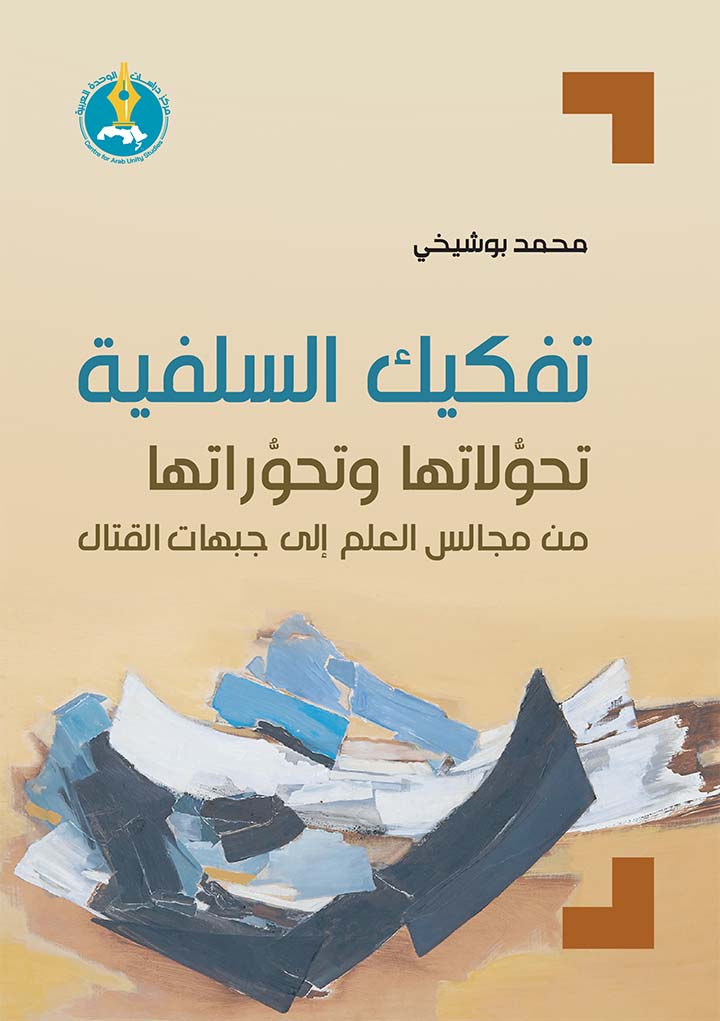
Al-Albani, named after Sheikh Muhammad Nasir al-Din al-Albani, represented a strong shock to the principles of traditional Salafism, by reviving the doctrine of the early hadith scholars, which was based on rejecting sectarianism, prohibiting imitation, adopting exoteric reading, and then raising the Sunnah to the status of the Qur’an. “Qutbism,” named after Sayyid Qutb, also represented a revolution against the Salafist “narratives” and the Brotherhood’s “pragmatism,” by creating a changeable approach based on “the correlation between motor growth and theoretical growth” as a basic rule and sub-rules represented by “rejecting jurisprudence,” “jihad is a product of jurisprudence,” and then “the stage of Sharia rulings.” While “Albanian” achieved a kind of conformity with “polarity” at the level of analyzing reality and similarity at the level of changing it. Identification at the level of analysis was represented by Al-Albani borrowing the concepts of “pre-Islamic times,” “government,” and “al-Mufasala” and surrounding them with a Salafi tinge. As for similarity at the level of change, it was embodied in Al-Albani’s adoption of a revolutionary concept of the “Victorious Sect” that made it identify with Qutb’s concept of the “unique Qur’anic generation.” This conformity and similarity stimulated the openness of the jihadist activists to adopt the Albanian methodology in dealing with the Sunnis, and thus the crystallization of the first beginnings of the “hybridization” processes that formed “Jihadist Salafism.” With the interaction of the jihadi idea with Sharia science, after it had been confined to ideological literature, Salafist references expanded in the jihadist blog and the jihadi movement moved from the movement formula to the Salafist formula. However, the discrepancy between the two basic components of jihadist Salafism, Albanian Salafism and the Qutb movement, necessitated the conflict between its legal leaders who leaned towards Salafism and its field leaders who were compliant with Qutbism, after the jihadist became a “jurist himself” out of disdain for the legal knowledge and its bearer and being convinced of the saying “A mujahid who sits behind does not give a fatwa.”
The Safekeep
تفكيك السلفية.. من مجالس العلم لجبهات القتال
Not Translated
Listen to book
Bibliographic Data
| Author | |
|---|---|
| Publisher | Center for Arab Unity Studies |
| Publisher Address | مركز دراسات الوحدة العربية |
| Country | Lebanon |
| Primary Category | Religions and Beliefs |
| Also In | |
| Published | 2025 |
| Language | Arabic (AR) |
| Pages | 448 pages |
| Edition | First edition |
| Dimensions | 14.53 x 2.34 x 21.67 cm |
| ISBN | '-ISBN 9786144984161 |
| Translation | Not Translated |