كيفية مواجهة نهاية العالم: دليل قديم لأزمنة نهاية العالم
كيفية مواجهة نهاية العالم: دليل قديم لأزمنة نهاية العالم
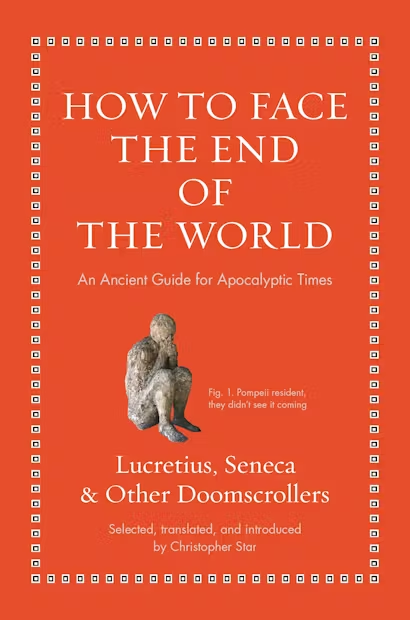
Opinion polls indicate that a large percentage of people believe we are living in the end times. Between the climate crisis, nuclear weapons, artificial intelligence, and other existential threats, it's easy to understand why. How should we think about the end of the world? How can we psychologically prepare for Doomsday and other disasters? This anthology presents ancient Greek and Roman writings on the end of the world, from the poet Hesiod and his prediction that Zeus would destroy humanity, to philosophers such as Plato, Lucretius, Seneca, and Epictetus, who viewed the end of the world as an inevitable and natural process of nature and the universe. These writers - pioneers of apocalyptic predictions - show how contemplating the extinction of a civilization or planet can be beneficial and healthy, and seek to teach readers how to face disaster without fear. This collection includes new translations and an introduction, as well as the original Greek and Latin texts on facing pages, presenting stories and ideas both familiar and unfamiliar. Here, Plato creates the myth of Atlantis to illustrate the idea that civilization is periodically annihilated by natural catastrophes, the Epicureans envision total planetary destruction in a universe governed by the laws of nature, the Stoics theorize that the universe is repeatedly consumed by its “creative fire” and then resurrected, and much more. In the process, we discover the ancient roots of modern apocalyptic preparedness and post-apocalyptic literature. But most of all, we learn how thinking about the end of the world can be strangely reassuring and improve the way we live today.
Bibliographic Data
| Publisher | Island PressWebsite |
|---|---|
| Publisher Address | info@press.princeton.edu |
| Country | USA |
| Primary Category | Social Studies |
| Also In | |
| Language | Arabic (AR) |
| Translation | Translated |