الاستغلال المالي
الاستغلال المالي
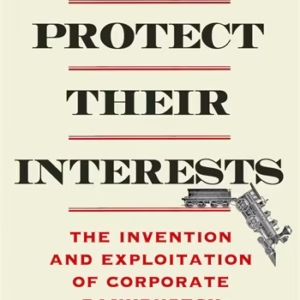
Bankruptcy proceedings under Chapter 11 of the US Bankruptcy Code are a tool to protect the economy as a whole from the collapse of large companies, although it is the largest companies that reap the biggest gains. According to the conventional narrative, modern corporate restructuring began in the 1890s, led by JP Morgan in a noble effort to protect bondholders from the exploitation of corporate executives. But what does this novel leave out? How do the true origins of bankruptcy law shed light on its present-day uses and abuses? Protecting Their Interests provides a groundbreaking historical account of how bankruptcy became what it is today—an arena for conflicts among high-ranking officials. Stephen J. Lubin debunks the myths surrounding the history of corporate restructuring, showing that they emerged a decade before Morgan, when business tycoon Jay Gould sought to maintain control of his railroad by reaching a settlement with a handful of wealthy investors. The 1885 restructuring of the Texas Pacific Railroad established a template for future corporate reorganization: insider trading, elite manipulation of the legal system, and judicial compliance. Lubin traces the evolution of bankruptcy through a series of major cases involving companies like W. T. Grant and Toys R Us, showing that it has always been a way for the powerful to maintain their power. This book exposes the shameful origins of bankruptcy law, and also examines the limited opportunities for reforming it.
Bibliographic Data
| Publisher | Columbia University Press |
|---|---|
| Publisher Address | ips@ingramcontent.com |
| Country | USA |
| Primary Category | Social Studies |
| Also In | |
| Language | Arabic (AR) |
| Translation | Translated |