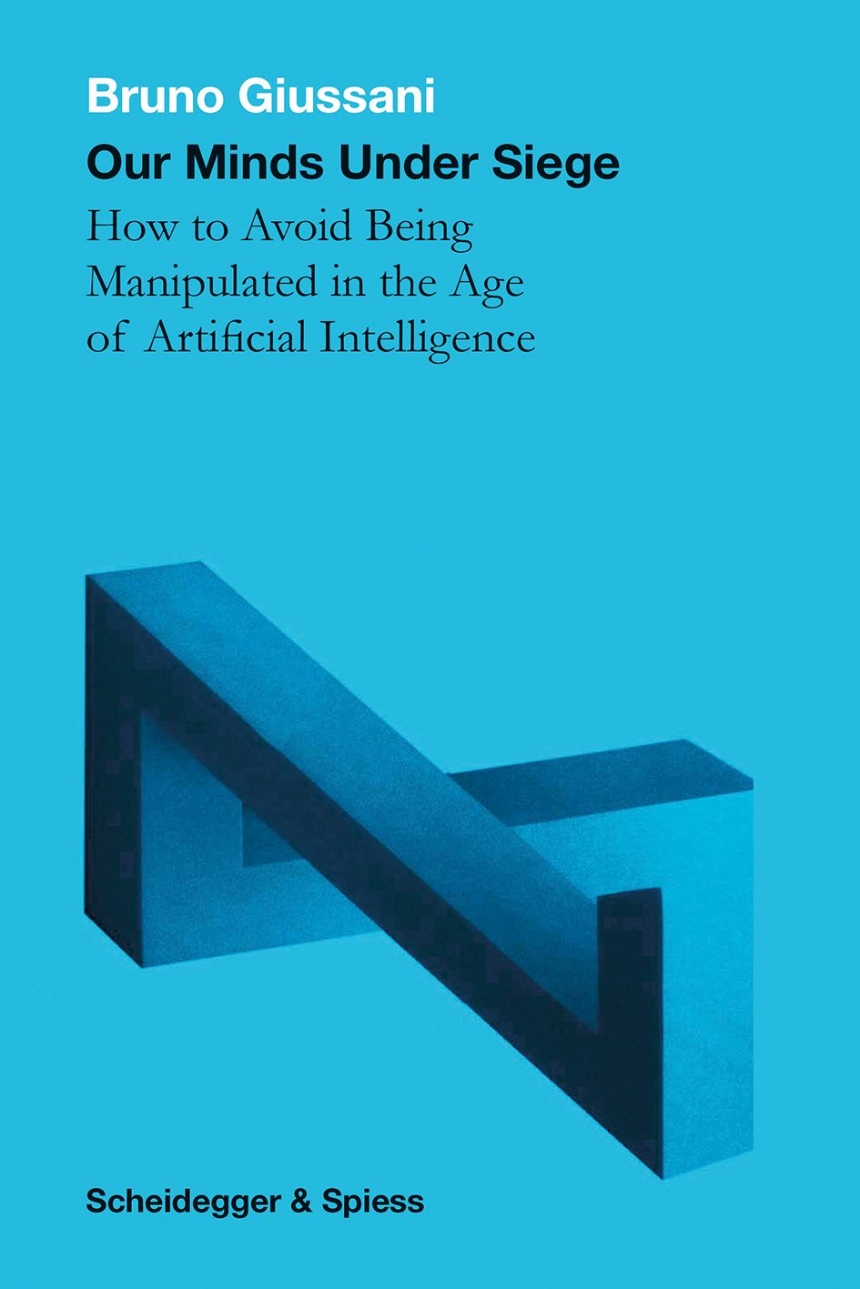
Our Minds Under Siege: How to Avoid Being Manipulated in the Age of Artificial Intelligence
عقولنا تحت الحصار: كيف نتجنب التلاعب بنا في عصر الذكاء الاصطناعي
Under the title “Our Minds Under Siege: How to Avoid Being Manipulated in the Age of Artificial Intelligence,” Bruno Giussani, former director of TED, provides a nuanced and disturbing dissection of contemporary digital reality. The book is not just a technical warning, but rather a cry to regain intellectual independence in a time where algorithms dominate. ##1\. The concept of “Technologies of Influence” Giussani starts from the premise that we are no longer dealing with “tools” that we control, but with “systems” that are designed to influence us. The book shows that the danger of artificial intelligence lies not only in “fake news”, but in the ability of these technologies to: Capture attention: designing interfaces and applications that exploit the psychological vulnerabilities of humans to ensure that they remain connected for as long as possible. Exploiting emotions: Analyzing users' emotional data and feeding them content that arouses anger, fear, or prejudice, because these emotions are the most "profitable" in the attention economy. ##2\. The Political Economy of Data and Algorithms Giusani deconstructs the economic structures behind AI, noting that: Data as raw material: Big Tech does not provide free services, but rather “mines” our personal data and turns it into behavioral predictions sold to advertisers or politicians. Concentration of Authority: AI is not neutral; It reflects the interests of the economic and political powers that own it, leading to a threat to democracy and the autonomy of individual decision. ##3\. The existential threat to “clarity of vision” The author argues that “our minds are under siege” because our ability to understand reality is beginning to erode. Through the “echo chambers” created by algorithms, the individual becomes trapped in a single view of the world, which weakens the faculty of critical thinking and makes society more divided and vulnerable to manipulation. ##4\. Resistance strategies: How do we survive? Giusani does not just diagnose, he offers a roadmap for “digital resistance”: Awareness of the mechanisms: Understanding “how” algorithms work is the first step to disabling them. Reclaiming Attentional Sovereignty: The book calls for practicing conscious “digital asceticism,” setting strict limits on how we consume content. To be competent users, not tools: The author stresses the need to learn how to use artificial intelligence as an aid to enhance our capabilities, without allowing it to guide our moral or political choices.
Bibliographic Data
| Publisher | University of Chicago PressWebsite |
|---|---|
| Publisher Address | custserv@press.uchicago.edu |
| Country | USA |
| Primary Category | Social Studies |
| Also In | |
| Published | 2026 |
| Language | Arabic (AR) |
| Pages | 220 pages |
| Edition | First edition |
| Dimensions | 15×22 |
| ISBN | 9783039423392 |
| Translation | Translated |