الرياضة والسياسة في المغرب بين الضبط والمقاومة: كرة القدم نموذجًا
الرياضة والسياسة في المغرب بين الضبط والمقاومة: كرة القدم نموذجًا
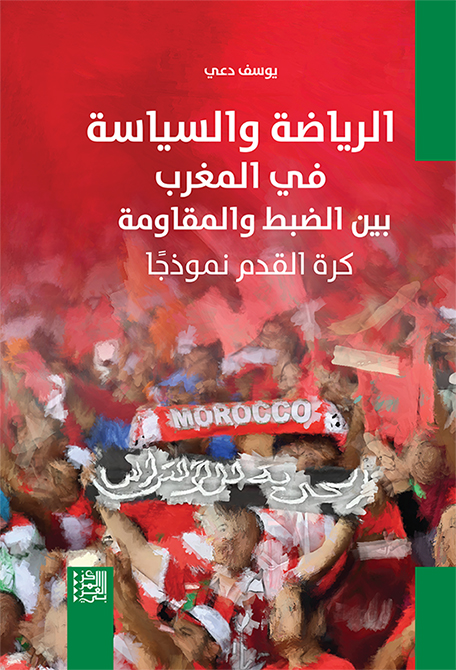
The Arab Center for Research and Policy Studies published the book Sports and Politics in Morocco between Control and Resistance: Football as a Model, written by Youssef Dai. It is 321 pages long, including an executive summary, an introduction, and eight chapters, in addition to a conclusion, references, and a general index. The book begins by refuting the prevailing saying that separates sports and politics, stressing that football has become a political and cultural tool par excellence, exploited by regimes and states for purposes that go beyond entertainment and sports to building identity, directing public opinion, and polishing the image of the regime. In the Moroccan context, the state used football during the reign of Hassan II as a means to produce national consensus and relieve tensions. However, the post-2011 transformations, especially with the escalation of protest movements, changed the equation and made stadiums spaces of objection and rejection. The book highlights the transformation of youth “ultras” groups, which had an encouraging nature, from sports entities into movements that express social and political anger and embody a subculture of resistance to official hegemony. Football thus entered a contested sphere between state and society; Authority alone no longer has a monopoly on employing collective emotion or national symbols. Theoretical frameworks for understanding football protest: between integration and hegemony. The author of the book Sports and Politics in Morocco relies on two main approaches to understanding the relationship between sports and politics. The first is the functional approach, which sees sport as a means of achieving social harmony and a tool for symbolic control within what is called “civil religion.” The second: the critical approach with Marxist roots, which believes that sport is nothing but an ideological device, used to numb the masses and consolidate authoritarian hegemony, and is also used to polish fascist and authoritarian regimes, and absorb popular tension. He touched on the "subculture" theory that emerged at the Birmingham Center for Cultural Studies, considering that young people, through music, dress and symbols, express a different political and social position; Researcher Sarah Thornton developed this perception, by introducing concepts related to “cultures of taste” related to class differentiation, to frame protest and symbolic behaviors within a more complex semantic field. On the other hand, political science used the concept of “political subculture” to analyze the ultras as a non-institutional political actor, expressing a counterculture that engages in the public space with a spirit of protest, not subject to traditional concepts of political practice. Moroccan Ultras: Identity, Resistance, and Mobilization Outside the System The book Sports and Politics in Morocco reveals the transformation of Ultras in Morocco into a rebellious youth actor, producing a political subculture that challenges authoritarian symbolism. Through collective singing, graffiti, and cheering rituals, a collective identity was formed, reflecting an alternative affiliation and explicit rejection of authority. Social media played a pivotal role in enhancing this awareness and accumulating a renewed protest narrative.
Bibliographic Data
| Publisher | Arab Center for Research and Policy Studies |
|---|---|
| Publisher Address | office@dohainstitute.edu.qa |
| Country | Qatar |
| Primary Category | Social Studies |
| Also In | |
| Language | Arabic (AR) |
| Translation | Translated |