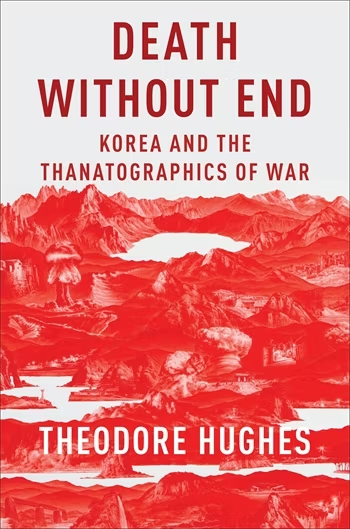
موت بلا نهاية .. كوريا وفن تصوير الموتى في الحرب
موت بلا نهاية .. كوريا وفن تصوير الموتى في الحرب
The Korean War was never officially declared, and no peace treaty was signed to end the war. The 1953 armistice did not stop the war, but rather represented its extension and expansion into a war-like emergency. How did the new reality of life under the armistice shape visions of the possible in North and South Korea? What meanings are attached to deaths in a so-called “limited war” that turns out to be borderless? What does the lack of an end to the Korean War reveal about the nature of war in the post-1945 era? Theodore Hughes goes beyond borders to show how stories of death and dying—what he calls the death graphic imagination—in North Korea, the United States, and South Korea stimulate ideas about history, the present, and the future. Death Without End shows how, from the late 1940s to the 1960s, literary texts, films, non-fiction books, and other forms of cultural production contributed to the emergence of revolutionary identities, gender identities, and global anti-communism through their treatment of the devastating loss of life, violence, destruction, and suffering caused by war. Hughes also traces how the Korean War entered American popular culture in unexpected but enduring ways. By linking Korean studies, American studies, and the cultural turn in international relations, this book offers new ways of understanding the never-ending Korean War and the global implications of its boundless logic.
Bibliographic Data
| Publisher | Columbia University Press |
|---|---|
| Publisher Address | ips@ingramcontent.com |
| Country | USA |
| Also In | |
| Language | Arabic (AR) |
| Translation | Translated |