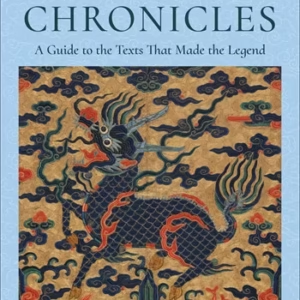
Our ideas about Confucius come from the stories told about him. He is often depicted as the great sage of ancient China, who passed on timeless moral principles to his disciples and subsequent generations. However, over the course of twenty-five centuries, Confucius has had different meanings for different people, representing different views on political order, moral conduct, and personal well-being. This book explores established narratives about Confucius, highlighting his role as a symbol of cultural ideals and a focus of intellectual debates across the ages. Wei-Yi Li translates and comments on a wide range of key texts, analyzing how the legacy of Confucius has been interpreted at different historical junctures. The author begins with the reference novel by historian Sima Qian, then reviews Daoist and legal writings from the Warring States period, a lyric about the murderer Confucius from the Tang Dynasty, anthology of jokes from the 18th century, modern writings such as Lu Xun, contemporary rap music, and more. Focusing on how these stories are told, Lee identifies continuities, discontinuities, and unexpected connections in depictions of Confucius, and discusses the questions they raise. Suitable for a wide range of courses, this book offers new ways of understanding Chinese cultural and intellectual history through Confucius and his transformations.
The Records of Confucius...a guide to the texts that made the myth
سجلات كونفوشيوس .. دليل للنصوص التي صنعت الأسطورة
Translated
Listen to book
Bibliographic Data
| Publisher | Columbia University Press |
|---|---|
| Publisher Address | ips@ingramcontent.com |
| Country | USA |
| Primary Category | Religions and Beliefs |
| Also In | |
| Published | 2026 |
| Language | Arabic (AR) |
| Pages | 368 pages |
| Edition | First edition |
| Dimensions | 6x9 |
| ISBN | ips@ingramcontent.com |
| Translation | Translated |