رسم الشخصية كفلسفة .. الآداب، والتقاليد، والأنواع
رسم الشخصية كفلسفة .. الآداب، والتقاليد، والأنواع
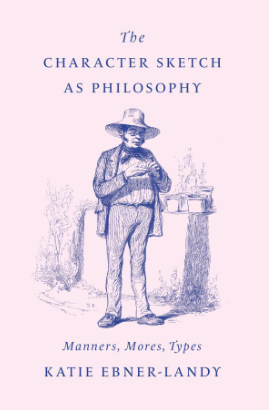
An insightful exploration of the moral and political power of character painting in early modern Europe—and its implications for our relationship with the genre today. In the fourth century BC, the philosopher Theophrastus, a student of Aristotle, created thirty descriptions of characters that depict common vices of Athenians: gossip, ill-timedness, cowardice, lack of modesty, superstition, and others. Centuries later, this obscure text - known as the Personalities - was translated with great enthusiasm and widely imitated by early modern Europeans, who were convinced of its moral and political importance. By tracing this resurgence of the Theophrastus tradition, Katie Ebner-Lande sheds new light on the role of character description as a philosophical tool. Ebner-Lande shows that the original "Personas"_is best understood as a work of political philosophy, intended to exhort Athenians to civic virtue. It is this feature that made the text so widely resonant in early modern Europe, where character descriptions once again represented a means of encouraging moral behavior and developing political knowledge. During the English Civil War, for example, character descriptions were used to characterize new political types such as supporters of parliament and supporters of the king. However, by the Enlightenment, moral philosophy's long association with character descriptions began to fade. A different philosophical approach prevailed, rejecting literary descriptions of customs, traditions, and patterns, and focusing instead on the principles underlying knowledge itself. This shift, in turn, contributed to a broader separation between literature and philosophy. “Character Drawing as Philosophy” presents a revealing intellectual history. It also encourages us to think about what literary description can contribute to morality and political thought today, and to think critically about the types of character drawings we still rely on, from the arrogant to the condescending man.
Bibliographic Data
| Publisher | Harvard University PressWebsite |
|---|---|
| Publisher Address | contact_hup@harvard.edu |
| Country | USA |
| Primary Category | Social Studies |
| Also In | |
| Language | Arabic (AR) |
| Translation | Translated |
| Keywords | أرسطوالشخصيةالفلسفة |