
مقدمة في فلسفة البنيوية الظاهراتية
مقدمة في فلسفة البنيوية الظاهراتية
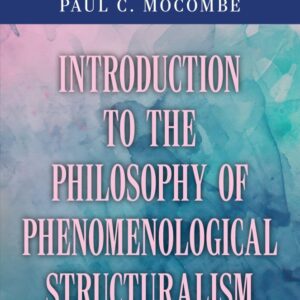
This book explores the comprehensive philosophical system underlying Paul C. Mocombe and the structural-phenomenological approach. This work explains the metaphysics, ontology, physics, epistemology, and axiology of this theory, and its implications for cultural life and the methodologies of the social sciences and humanities. The book aims to provide a comprehensive analysis of his philosophical system through which he attempts to reconcile the phenomenological approach with the structural approach to solve the problem of “Structure vs. Agency” in the social sciences. ## Objective analysis of the book: - Central thesis: The book proposes a universal materialist theory that believes that consciousness is a “fifth force” in nature. Mocombe argues that consciousness arises from subatomic particles called psychions that are recycled across the multiverse and embodied in the human brain. - Integrating Physics and Philosophy: The book links concepts from quantum mechanics (such as ORCH-OR theory) and traditional philosophies such as Haitian Idealism to provide an explanation of how the mind and society are formed. - Solving the dilemma of structure and effectiveness: The book rejects the idea that the individual is entirely guided by social structures or has complete choice in isolation from them. Instead, he introduces the concept of “praxis” (praxis); The individual's consciousness is shaped through interaction with frameworks of material and linguistic resources controlled by dominant powers. - The view of morality and language: The book believes that moral standards and linguistic meanings are not absolute, but rather are the product of “linguistic games” linked to social classes and serving to reproduce the prevailing structural system. \[3, 7, 8, 9, 10, 11, 12, 13, 14\] ## The structure and importance of the book: The book covers detailed chapters on: 1. Metaphysics and ontology: How do existence and consciousness arise? 2. Epistemology (theory of knowledge): How do we perceive the world through “structure” and self-awareness? 3. Applications of the humanities: Implications of this philosophy for the study of culture, race, and social class. In short, the book is an ambitious attempt to create a philosophical “theory of everything” that combines the hard sciences (physics) and the humanities to explain human existence. Would you like to delve deeper into the book's interpretation of consciousness as a physical force, or would you like to learn more about its application of this philosophy to social issues?
Bibliographic Data
| Publisher | Nova Science Publishers |
|---|---|
| Publisher Address | support@novapublishers.com |
| Country | USA |
| Also In | |
| Language | Arabic (AR) |
| Translation | Translated |
| Keywords | البنيويةمقدمة في فلسفة البنيوية الظاهراتية |