G.I. G-Men The Untold Story of the FBI's Search for American Traitors, Collaborators, and Spies in World War II Europe
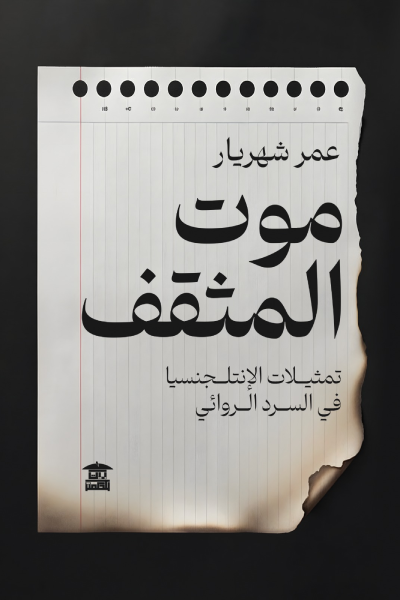
موت المثقف.. تمثيلات الإنتلجنسيا في السرد الروائي
Similar to “The Death of the Author” by the French critic Roland Barthes, the poet Omar Shahryar called his recently published book “The Death of the Intellectual,” which is a scientific treatise in which he discusses the presence of the intellectual and his role through representations of the intelligentsia in novel narratives, taking the creativity of the late Egyptian novelist Alaa El-Deeb as a model for observation, analysis, and application, and in the shadow of a critical vision revealing the nature of the intellectual and his falling into the ropes of contradiction, between the extremes of brightness and opposites. ## The intellectual between alienation and alienation But why the death of the intellectual, which leads to nothingness, and not his suicide, as it is a position that rejects life and its absurdity? Did the circles of alienation and alienation tighten his soul and body, so that he became a stranger to himself, his reality, and his dreams in a world in which there are multiple concepts and visions, similar texts and weaving methods, and a person is culturally and cognitively confused in searching for a compass that will lead him to the truth?! ## The Intellectual is a Problematic Personality The book was published by “House of Wisdom” in Cairo, and is located in 258 pages of moderate pieces, and Shahrayar begins it with an introduction, in which he confirms that the intellectual is a problematic personality by nature, pointing out that the Arab intellectual in general, and the Egyptian in particular, has gone through distinct stages and sharp transformations in the second half of the twentieth century and the beginning of the twenty-first century, which increased his concerns and sense of alienation and lack of familiarity with everyone. Those around him also deepened his feeling of his inability to integrate with society. ## The Concept of the Intellectual Then he discusses the role and concept of the intellectual, in language and culture, and in the ideas and opinions of many Arab and foreign researchers and thinkers, such as Edward Said, Burhan Ghalioun, Muhammad Abed al-Jabri, Ali Shariati, and Gramsci, and he sees that they all start “almost from the link between the intellectual and his role, and not with the knowledge he possesses, and therefore the intellectual takes his merit and existence from his critical role that opposes everything that is traditional and stable.” The question that arises here as a comment on these opinions: Is not possessing knowledge one of the most important roles and weapons that enhance the role of the intellectual, in the face of oppression, oppression, and exile?! Then the intellectual does not elevate the ideas of the class to which he has ascended, according to Gramsci, whatever its identity, but rather he elevates and ascends with his own ideas, with what he dreams of, and what he wants for his reality and the world around him to be. Culture is not thrown by the wayside, but rather science, knowledge and construction, which ascends and advances through the accumulation of expertise and experiences and the multiplicity of angles of view and vision.
Bibliographic Data
| Author | |
|---|---|
| Publisher | Beit Al-Hekma Group for Cultural Industries |
| Publisher Address | info@baytelhekma.com |
| Country | Egypt |
| Primary Category | Philosophies and Cultures |
| Also In | |
| Language | Arabic (AR) |
| Pages | 260 pages |
| Edition | الأولى |
| ISBN | 9786338316570 |
| Translation | Not Translated |