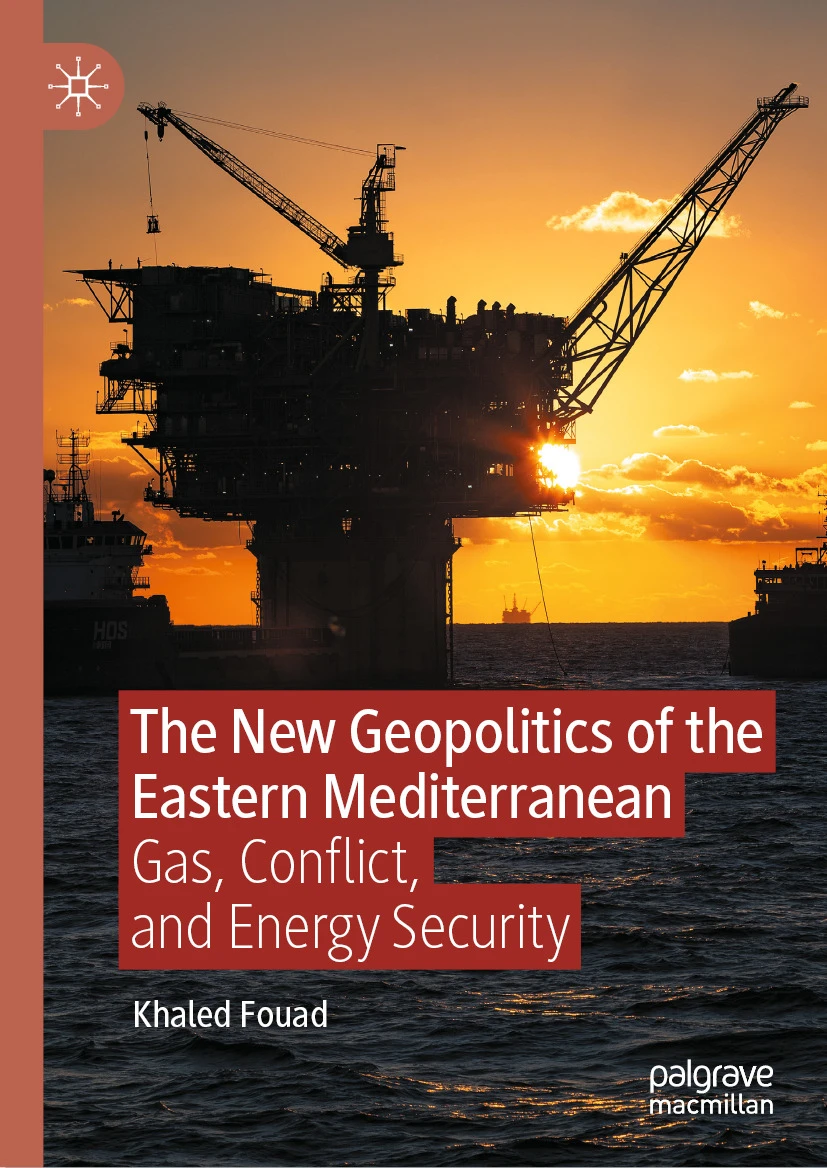
The New Geopolitics of the Eastern Mediterranean
الجغرافيا السياسية الجديدة لشرق المتوسط: الغاز والأزمة وأمن الطاقة
The book was finally published and I received the printed copy of the book after a long journey of research and revisions to reach the final stage of production from the publishing house (Springer/Palgrave Macmillan). The credit, first and foremost, for this work to emerge in this form was due to the success of God Almighty, then the support and assistance of my family, friends, and teachers, all of whom I cannot do justice to for their major contribution to this work. Before I present a summary of the book, I would like to clarify that the main motivation behind my doctoral thesis and then converting it into a book was the pursuit of an attempt to understand one of the strategic tools that Israel possesses and with which it builds its economic power and geopolitical influence in the region, because of my conviction that the path to confronting the enemy must begin with an accurate understanding of the tools of its power, and perhaps this attempt contributes to building a small part of a broader picture. The book “The New Geopolitics of the Eastern Mediterranean: Gas, Conflict, and Energy Security” is the doctoral thesis that I obtained a year and a half ago. The book sheds light on the story of Israeli gas, not only from the perspective of Israel’s efforts to develop the gas sector, attract investments, and increase production and exports, but more importantly is the concept of energy security among the Israeli decision-maker, how the concept formulated production and export policies, and how it strengthened Israel’s position as a regional player in the field of energy and an exporter of gas to the markets of the Eastern Mediterranean and Europe. In this context, the book highlights the realistic goals of Israeli gas export policies: • Linking Israeli energy security to regional energy security, especially Egypt and Jordan, meaning that the damage to the Israeli gas/energy sector is directly reflected in damage to the gas sector in Egypt and Jordan, which was proven by the Gaza war and the Iran war. • Using gas as a geopolitical tool to manage conflicts with Egypt, something that was repeated on more than one occasion during the two years of the Gaza war in an undeclared manner and reached public statements linking new gas deals to the context of increasing tensions between the two sides. • Increasing Israel’s strategic importance to Europe and the Eastern Mediterranean countries as a major source of natural gas supplies, which contributes to strengthening Israel’s regional influence. The book concludes that Israel's development of its relations in the field of gas with its neighbors, especially Egypt and Jordan, was not only for economic gains and integration in the field of energy, but more importantly, it was to enhance Israel's security and geopolitical interests. In a more precise sense, Israel used gas as a tool for managing security dynamics in the region. This conclusion leads to the final conclusion that the development of gas relations between Israel and the countries of the region will lead to an increase in geopolitical tensions in the region, contrary to what is being promoted, which is that this type of relationship enhances peace and stability in the region. Author
Bibliographic Data
| Author | |
|---|---|
| Publisher | Springer |
| Publisher Address | customerservice@springernature.com |
| Country | USA |
| Primary Category | Economy and Development |
| Also In | |
| Language | Arabic (AR) |
| Pages | 252 pages |
| Edition | الأولى |
| ISBN | 978-3032155191 |
| Translation | Not Translated |