The Maladies of Happiness
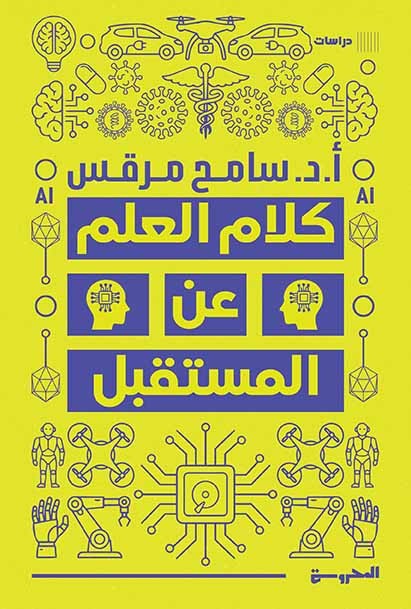
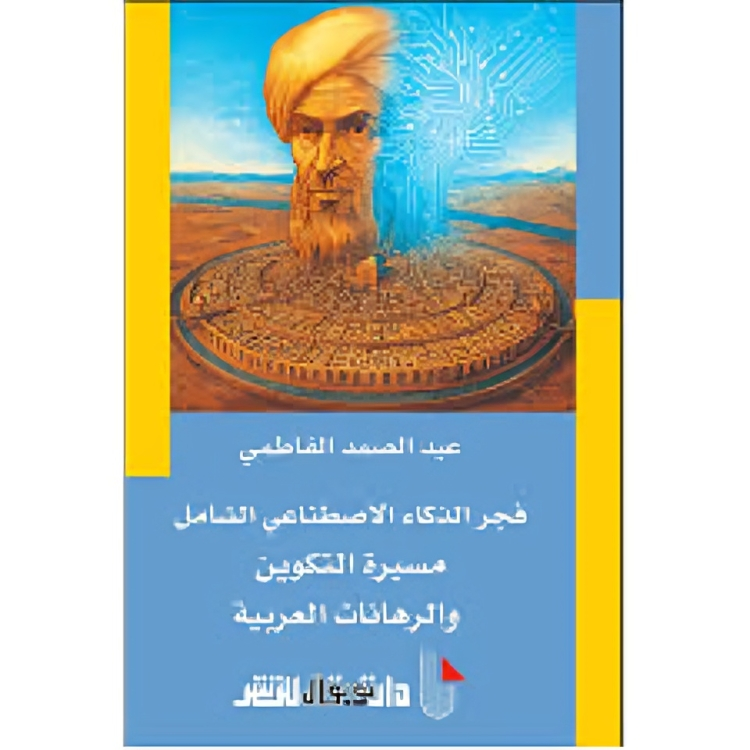
فجر الذكاء الاصطناعي الشامل.. مسيرة التكوين والرهانات العربية
Contrary to popular belief about intelligence Artificial, seeks to reframe artificial intelligence within a broader cultural context, as an extension of a deep and complex intellectual memory, whose roots go back to Islamic civilization, where its scientific institutions such as the “House of Wisdom” laid the foundations of systematic thinking. Based on this perception, the book reviews the contributions of the most prominent Muslim thinkers and scholars, from Al-Khwarizmi, who established the procedural rules of algebra. And algorithms, to Al-Kindi, who developed statistical reasoning, and Ibn Al-Haytham, who established the experimental method based on observation and verification, all the way to Al-Farabi and Ibn Sina, who crystallized logical and conceptual systems similar in essence to what modern intelligent systems do. Regarding the modern transformation, Al-Fatimi points out that artificial intelligence began its technical path with Alan Turing in 1950, when the discussion moved from philosophical speculation to a scientific framework, before the term was officially crystallized in 1956 at the Dartmouth conference led by John McCarthy. Since then, the field has evolved between two main trends: symbolic, based on logical rules, and connectionist, inspired by neural networks. ## The dangers of the race for power. After the researcher touched on the history of modern artificial intelligence as a non-linear path that oscillates between prosperity and stagnation, he embarks on an in-depth journey of investigation, starting from basic principles to giant language models, before the sudden transition that he experienced from being a technical tool, to a lever to reshape the global balance of power, as major powers take the lead in this context, while other parties seek to impose regulatory models that control its path. In parallel, giant companies compete for strategic resources, which deepens the concentration of influence in the hands of specific actors.
Bibliographic Data
| Author | |
|---|---|
| Publisher | Dar Tobagal |
| Publisher Address | etoubkal@gmail.com |
| Country | Morocco |
| Primary Category | Technologies and Sciences |
| Also In | |
| Language | Arabic (AR) |
| Pages | 272 pages |
| Edition | الأولى |
| ISBN | 978-9920-608-25-1 |
| Translation | Not Translated |