Speak Up How to be a successful presenter and media spokesperson
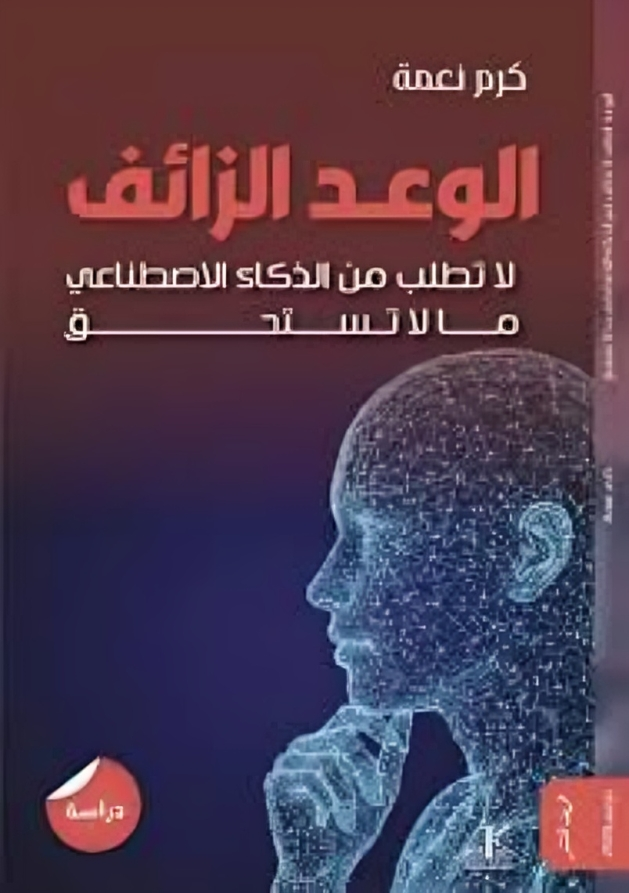
الوعد الزائف: لا تطلب من الذكاء الاصطناعي ما لا تستحق
The book “False Promise: Don’t Ask Artificial Intelligence for What You Don’t Deserve” by writer Karam Nehme presents a critical and philosophical vision that warns against digital technology robbing human meaning and effort. The work defends the human right to fragility and creativity, criticizing the “false promise” of algorithms that reshape public taste. The book “The False Promise” by the Iraqi journalist based in London, Karam Nimah, will be one of the most controversial books at the beginning of the year 2026. In this book, Nimah does not provide a guide to using technology, but rather presents a warning “manifesto” against slipping behind the promises of artificial intelligence that may strip the human being of his creative essence and cognitive entitlement. The first axis: “Merit” as a work philosophy The book focuses in its essence on the word “Merit”. Karam Nehme believes that true knowledge and creativity are the result of suffering, accumulation of experiences, and painstaking reading. The writer argues that asking artificial intelligence to write a poem or an essay or analyze a philosophical dilemma for someone who has not made the effort to understand the origins of these arts is a kind of “self-theft.” - Central Idea: If you do not deserve the result of your mental effort, the machine will only give you the “illusion of achievement.” The second axis: The false promise and cultural modeling Nimah criticizes what he calls the “false promise” of cognitive democracy. According to his vision, the machine does not create something new, but rather recycles what is available in an algorithm-based manner. AI-generated content lacks “soul,” “human context,” and “creative error.” The book warns against the transformation of human culture into a “canned” and “refined” culture that kills individual uniqueness. The third axis: The role of the journalist in the age of algorithms** As a veteran journalist, Karam Nehme devotes a large portion of the book to talking about the future of journalism and creative writing. He criticizes the "mental laziness" that has afflicted newsrooms, where the journalist has become a technical mediator rather than a truth seeker. The book calls for restoring the role of the “controversial intellectual” who does not accept ready-made algorithmic answers.
Bibliographic Data
| Author | |
|---|---|
| Publisher | Khareef Publishing |
| Publisher Address | khraiefeditions@hotmail.com |
| Country | Tunisia |
| Primary Category | Technologies and Sciences |
| Language | Arabic (AR) |
| Pages | 160 pages |
| Edition | الأولى |
| Dimensions | 15×21 |
| Translation | Not Translated |