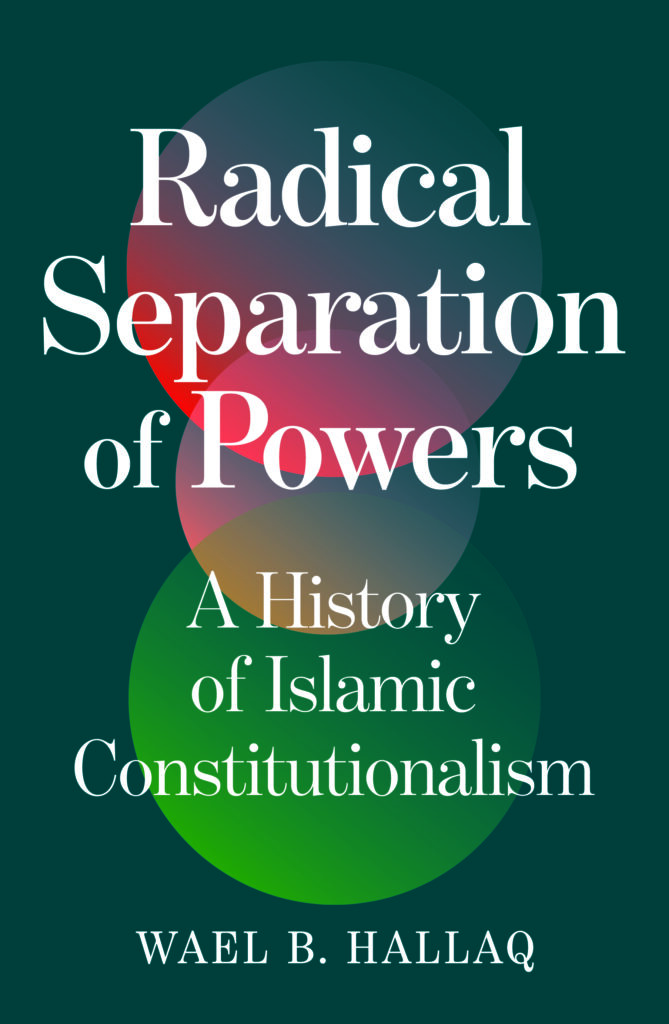
Over two centuries of Orientalist studies, studies denied the existence of a constitutional concept in Islam. Islamic political practices in pre-modern times were mistranslated, misinterpreted and condescended by colonialists, and judged to be inferior to the standards of Western liberalism. In this groundbreaking book, Wael Hallaq, one of the most prominent scholars of Islamic law, corrects this misconception. After Europe suffered from the cruelty of absolute monarchies, it saw in Islam everything that it hated in itself. Through his quest to understand Islamic governance from the perspective of its rational heritage, Hallaq reveals that Islam in pre-modern times had a rich and distinct constitutional heritage, starting from the individual as a political actor to the authority of the rulers. The breadth of Hallaq's analysis of Islamic constitutionalism and the philosophical depth he brings to it open new horizons on political thought in pre-modern Islam. His skillful readings of key texts in Islamic political theory contribute to uncovering thick layers of distortion, reviving those texts and allowing us to see them with new eyes. In the process, he offers a scathing critique of both Orientalism and liberalism. This book will have a transformative impact on the study of Islamic political thought, but its arguments speak to a much broader audience, which will also be indebted to Hallaq. Muhammad Qasim Zaman, author of the book “Islam in Pakistan: A History.”
Radical separation of powers...the history of Islamic constitutionalism
الفصل الجذري للسلطات.. تاريخ الدستورية الإسلامية
Translated
Listen to book
Bibliographic Data
| Author | |
|---|---|
| Publisher | Oneworld : الجسر البريطاني بين عمق الفكر وسحر الحكاية |
| Publisher Address | info@oneworld-publications.com |
| Country | Britain |
| Primary Category | Ideas and Policies |
| Also In | |
| Published | 2026 |
| Language | Arabic (AR) |
| Pages | 592 pages |
| Edition | first |
| Dimensions | 14.53 x 2.34 x 21.67 cm |
| ISBN | 9781836431176 |
| Translation | Translated |
| Keywords | الفصل |
Articles About This Book
Essence of Ideas
الفصل الجذري بين السلطات: رؤية وائل حلاق للدستورية الإسلامية
Radical separation of powers...the history of Islamic constitutionalismMay 13, 20269 min