حياتُنا ليست سلعاً
حياتُنا ليست سلعاً
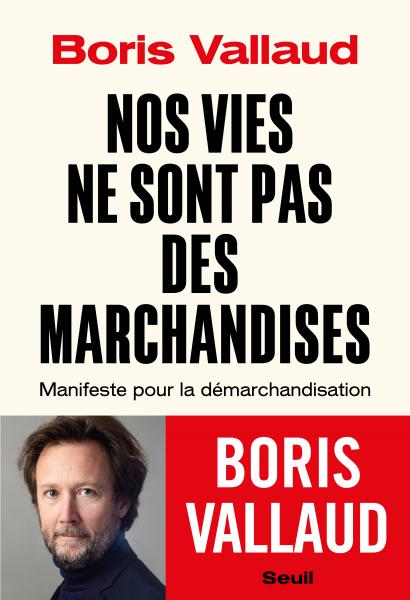
French thinker Boris Vallo, in his book “Our Lives Are Not Commodities”, published in Paris by “Soy Publications” (2026), poses a traditional problem in a contemporary form, which is to identify the areas that should be protected from the logic of the market. However, this approach is based on a debatable assumption, which is that market expansion necessarily represents a threat to human values, while it can be viewed as a mechanism for organizing resources and achieving a degree of efficiency and innovation in multiple fields, including health, education, and culture. In this context, Vallo uses the concept of “decommodification” as an analytical tool and a practical program, but this concept may also be understood as a call to restrict economic dynamics that have historically contributed to improving living standards and expanding access to services, instead of confining them to bureaucratic frameworks that may limit their effectiveness. Vallo starts from a diagnosis that the last four decades have witnessed an unprecedented penetration of market logic. However, a different reading may consider this expansion a natural result of globalization and technological development, as economic exchange is no longer limited to production, but rather has become part of the structure of modern life, contributing to connecting individuals and expanding their options, from digital education to advanced health services. As for what the author calls “the comprehensive market,” it is presented as a revolution in the meaning of the human being, while it can be understood from another angle as a transformation in the forms of social interaction, where the human being is no longer just a passive recipient, but rather an actor who chooses, evaluates, and participates in the production of value. In this context, it does not seem necessary to have a sharp conflict between “price” and “dignity” as in Kant**, as economic systems can integrate with moral values instead of contradicting them, and what Georg Lukács described as commodification may be reinterpreted as part of a process of rationalization and organization of relationships, not necessarily reducing them to inanimate objects.
Bibliographic Data
| Publisher | Éditions du SeuilWebsite |
|---|---|
| Publisher Address | contact@seuil.com |
| Country | France |
| Also In | |
| Language | Arabic (AR) |
| Translation | Translated |