سياسات المعرفة في الإسلام
سياسات المعرفة في الإسلام
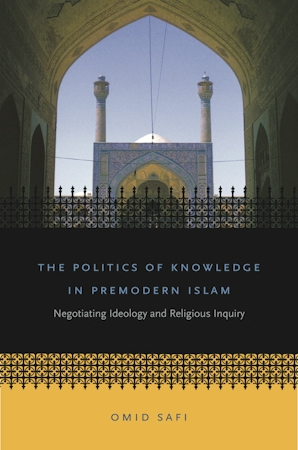
The eleventh and twelfth centuries witnessed a very important period in Islamic history. The Great Seljuks, a Turkic-speaking tribe from Central Asia, ruled the eastern half of the Islamic world for much of that period. In a comprehensive analysis that combines social, cultural, and political history, Omid Safi shows how the Seljuks sought to establish a permanent political presence through alliance with scholars and saints, including a number of well-known Muslim Sufis, who worked under state patronage. To legitimize their political power, the Seljuk rulers presented themselves as protectors of what they claimed to be a sound and normative vision of Islam. Officials in government institutions, such as religious schools and khanqahs, formulated their concept of religious correctness. Thus, religious correctness was linked to political loyalty, and disloyalty to the state was labeled religious heresy. Drawing on a vast reservoir of primary sources, and avoiding outdated analytical terms such as nationalism, Safi reconsiders traditional views about the Seljuks as benevolent Muslim rulers, and about Sufis as immortal mystics. It makes an important contribution to understanding Islam in ancient times, as well as shedding light on the complex relationship between authority and religious knowledge.
Bibliographic Data
| Publisher | University of North Carolina Press |
|---|---|
| Publisher Address | info@uncpress.org |
| Country | USA |
| Also In | |
| Language | Arabic (AR) |
| Translation | Translated |