"العلم الزائف".. كيف يُختطف الدين باسم المختبر؟
العلم الزائف".. كيف يُختطف الدين باسم المختبر؟
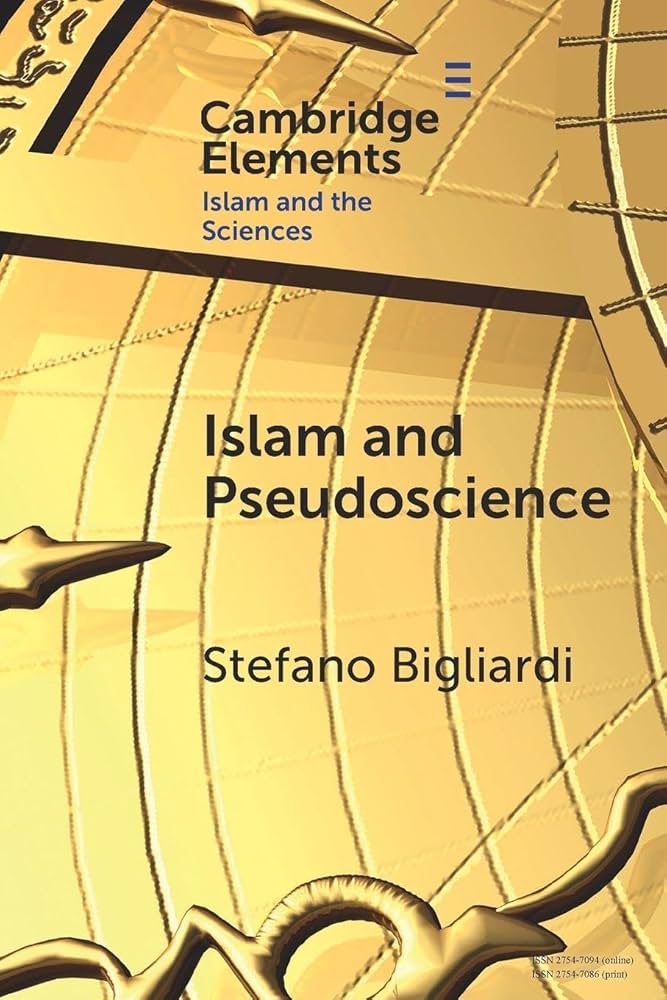
The relationship between metaphysical religious visions and scientific methods is one of the most complex cognitive problems in the modern era, as the human mind constantly seeks to reconcile religious text with empirical knowledge. However, this pursuit has often produced an ambiguous area called “pseudoscience,” where the language and tools of science are used to justify prior convictions or give modern legitimacy to non-scientific perceptions. The impact of this confusion is not limited to theoretical debate, but extends to education, health practices, and public awareness, which makes there an urgent need to dismantle this phenomenon and draw clear boundaries between faith as a field of belief, and science as an experimental activity based on doubt and review. In this context, the book “[Islam and Science] stands out Fake](https://www.ajnet.me/culture/2026/3/24/%D8%A7%D9%84%D8%B9%D9%84%D9%85-%D8%A7%D9%84%D8%B2%D8%A7%D8%A6%D9 %81-%D9%83%D9%8A%D9%81-%D9%8A%D8%AE%D8%AA%D8%B7%D9%81-%D8%A7%D9%84%D8%AF%D9%8A%D9%86-%D8%A8%D8%A7%D8%B3%D9%85)" By researcher Stefano Bigliardi, published in 2025, as one of the most prominent works that addressed this problem with analytical boldness. The book provides an in-depth reading of the debates taking place in the Islamic world, where religious facts are confused with scientific data. The author does not limit himself to describing the phenomenon, but rather delves into its epistemological structure, revealing how science is being used outside its context, turning it into a justification tool instead of an exploratory method. Bigliardi reveals a fundamental contradiction in which supporters of what is known as the “scientific miracle” or “Islamic creationism” fall into, as their attempts to give a scientific character to religious texts lead to the opposite result: undermining the sanctity of the text, by making it dependent on variable and refutable scientific theories. Science, by its nature, is a cumulative process based on doubt and experimentation, while religion is based on certainty and faith. When science is used to prove "ready-made facts", it loses its critical essence and turns into a mere propaganda tool, while the doctrine is thrown into the circle of continuous justification. The book presents a range of critical positions from a number of thinkers and scientists who confronted the phenomenon of “pseudoscience,” including Ziauddin Sardar, who believes that transforming religious text into a source of scientific knowledge makes faith hostage to the fluctuations of theories. The book concludes that confronting “pseudoscience” does not mean fighting religion, but rather aims to protect both science and faith from misappropriation. The systematic separation between the two fields does not mean a rupture, but rather allows each of them to work within its limits: science in explaining natural phenomena, and religion in directing meaning and values.
Bibliographic Data
| Publisher | Cambridge University PressWebsite |
|---|---|
| Publisher Address | Cambridge University Press |
| Country | Britain |
| Primary Category | Philosophies and Cultures |
| Also In | |
| Language | Arabic (AR) |
| Translation | Translated |