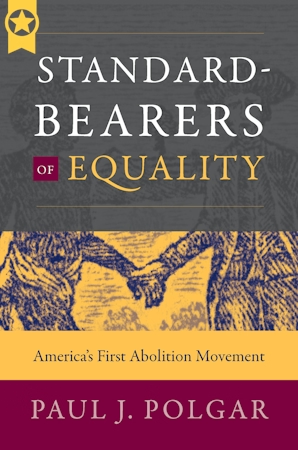
حاملو لواء المساواة.. أول حركة لإلغاء العبودية في أمريكا
حاملو لواء المساواة.. أول حركة لإلغاء العبودية في أمريكا
Paul Polgar recovers the racially inclusive vision of America's first abolitionist movement. By highlighting the activities of the Pennsylvania Abolitionist Society, the New York Emancipation Society, and their African American allies during the post-American Revolution and early founding era, he reveals the platform of this comprehensive coalition for black freedom and equality. By protecting and expanding the rights of people of African descent, and proving that black Americans could become good citizens of the new republic, these activists, whom Polgar calls “the pioneers of the first abolitionist movement,” sought to end white racial prejudice and eliminate racial inequality. However, beginning in the 1820s, colonialism threatened to extinguish this racially inclusive movement. Colonial advocates claimed that what they saw as permanent black inferiority and invincible white racial prejudice meant that slavery could only end with the exile of freedmen from the United States. By attracting many reformers to its ranks, this radically different antislavery movement marginalized the activism of early American abolitionists and obscured the racially progressive origins of the American abolitionist movement that Bulgar was now rediscovering. In his reinterpretation of the early history of antislavery in America, Polgar shows that the late eighteenth and early nineteenth centuries are no less important than the mid-nineteenth century in the history of race, rights, and reform in the United States.
Bibliographic Data
| Publisher | University of North Carolina Press |
|---|---|
| Publisher Address | info@uncpress.org |
| Country | USA |
| Also In | |
| Language | Arabic (AR) |
| Translation | Translated |