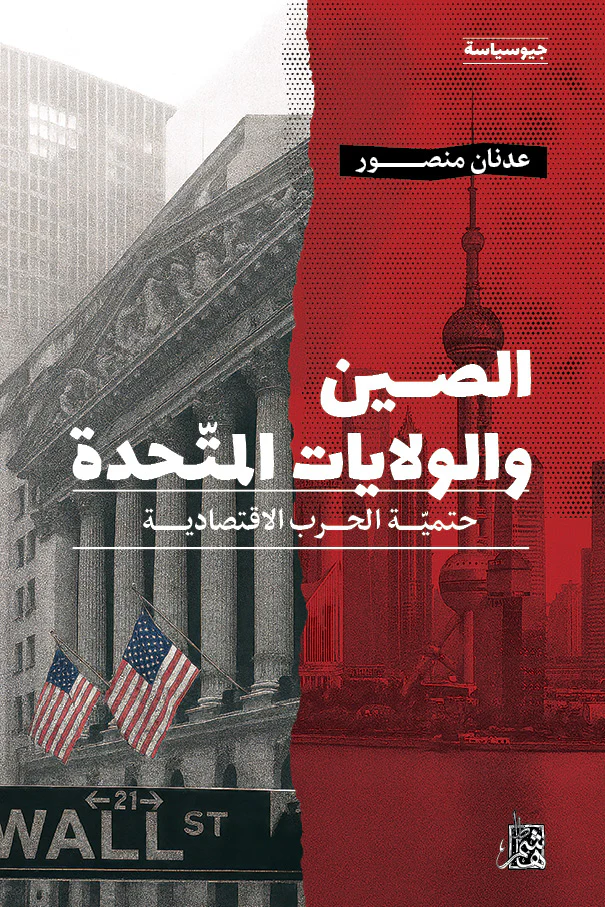
اضطراب دائم: عودة الجيوش الخاصة وظهور العصور الوسطى الجديدة
اضطراب دائم: عودة الجيوش الخاصة وظهور العصور الوسطى الجديدة
Since the end of the Cold War, private security companies — companies that traffic in conflict and kill or train others to kill, usually in foreign lands — have proliferated at an alarming rate. Surprisingly, the main consumer of this new service is not weak states seeking to consolidate their monopoly on force (although this has already happened), but rather powerful states such as the United States of America, which has the largest monopoly on force in the world. This thesis examines how and why this happened. The emergence of private security companies is also indicative of a broader trend in international relations: the emergence of what is known as the New Middle Ages. The erosion of prohibitions on military action signals a return to the pre-Westphalian norm of the Middle Ages, when states did not enjoy a monopoly of force and the subsequent special authority in world politics. Rather, the medieval system was polycentric, with power distributed among states and non-state actors alike. Since the return to the pre-medieval status quo is occurring globally, it is more appropriately described as “neo-medieval globalization.” It is a multipolar global system that does not center around the state, and is characterized by overlapping powers and loyalties at the local and global levels. This does not mean that the world will return to what it was a century ago. States will not disappear, but their importance will diminish from what it was a century ago. The globalization of the new Middle Ages does not mean chaos and disorder; The world order will continue to be in a state of perpetual chaos that confines problems rather than solves them. One of the main challenges of the globalization of the new Middle Ages is the commodification of conflict: offering the means of war to anyone who can afford them will change the nature of war, its causes, and its future. The implications of this matter are that it indicates that international relations in the twenty-first century will be closer to the twelfth century than to the twentieth century.
Bibliographic Data
| Publisher | Mills & BoonWebsite |
|---|---|
| Publisher Address | ' info@millsandboon.co.uk |
| Country | Britain |
| Also In | |
| Language | Arabic (AR) |
| Translation | Translated |