الوهم الغربي عن الطبيعة البشرية
الوهم الغربي عن الطبيعة البشرية
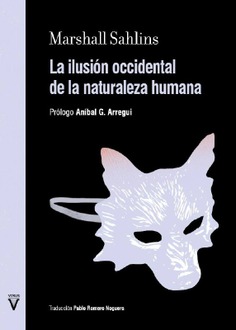
When the Athenians, in Thucydides' famous Dialogue of Melians, invoke the same law of the strongest, one might think that the concept we call "human nature" has attained its modern Western function as an excuse for morally problematic cultural practices: the subjugation of women, frequent monogamy, or the obsession with money. As Marshall Sahlins explains at one point, this book shows a “fatal mistake” that affects the entire history of the West: the separation of nature and culture, which has shaped our understanding of the world, of humanity, and of our social models. The pretext of human beings' "animal nature" was used to establish forms of government or social hierarchies that justified fear and violence as the basis for systems of government, or the separation of women and men or civilized society/savage society. But while for centuries philosophy and the social sciences have defended the idea of an essential evil in man (or its opposite: Rousseau's noble primitive man), this concept has changed. The innate selfishness that had to be suppressed is now considered a good because it is “natural”: human nature thus justifies neoliberal individualism. In response, Marshall Sahlins deconstructs and exposes this entire historical construct, asking a question that has been right before our eyes for centuries: Isn't the only human nature culture in all its diverse social, historical, and anthropological forms?
Bibliographic Data
| Publisher | Ediciones AkalWebsite |
|---|---|
| Publisher Address | atencion.cliente@akal.com |
| Country | Spain |
| Also In | |
| Language | Arabic (AR) |
| Translation | Translated |