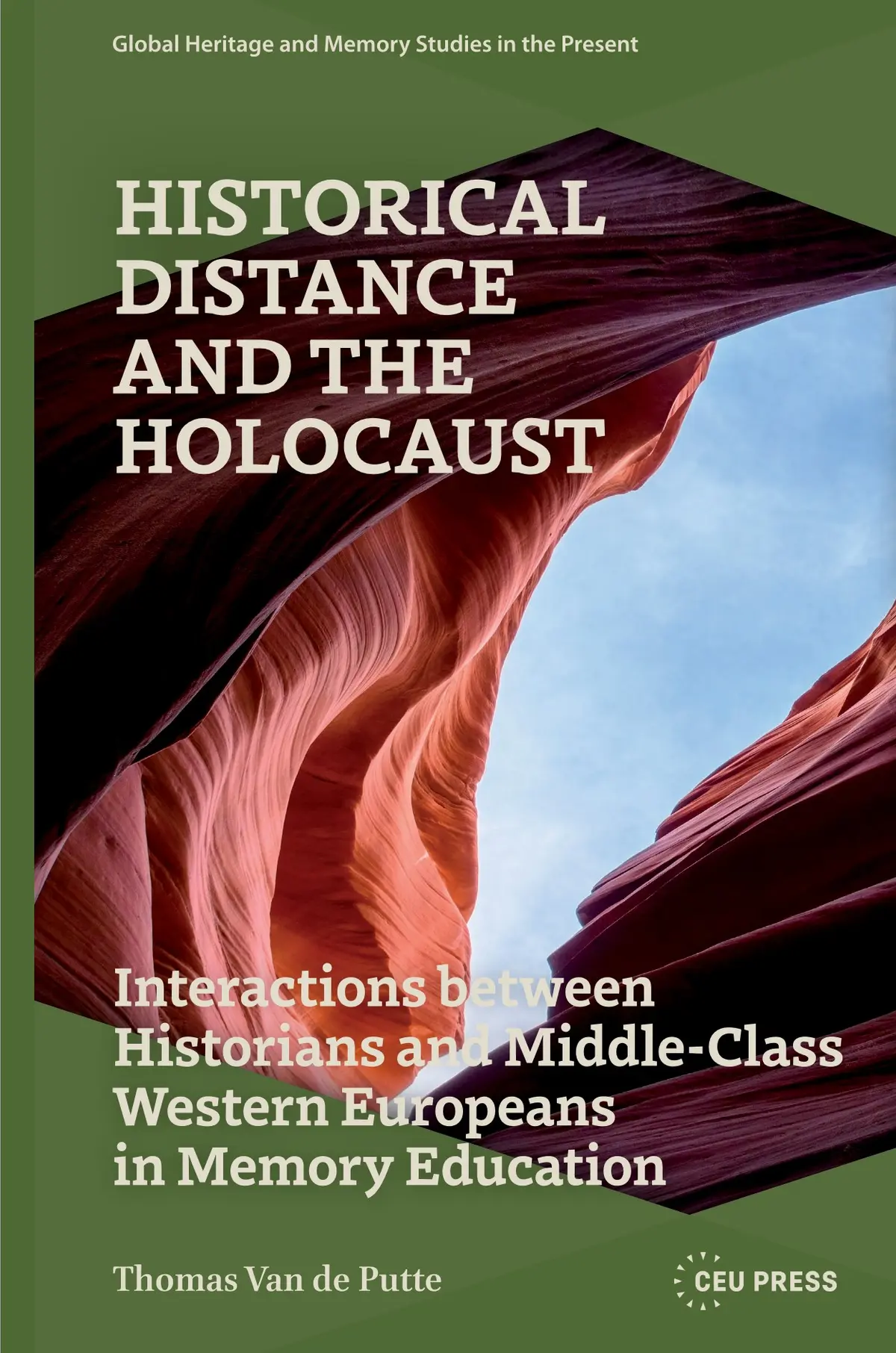
المسافة التاريخية والمحرقة
المسافة التاريخية والمحرقة
Translated
Interactions between historians and middle-class Western Europeans in memory education What happens when Holocaust historians emerge from their academic isolation and begin to interact with the general public? This book examines practices and discourses of historical distancing and their impact on popular understandings of the Holocaust among white, middle-class Europeans. In five chapters, Historical Distancing and the Holocaust describes and explains how historians, in their interactions with the general public, strip the Holocaust of its moral meaning and emotional burden, narrate it as a "system," and use sick Holocaust-related humor as a strategy of distancing. A detailed interactional analysis and careful ethnographic description shows how practices of temporal, moral, and affective distancing reinforce white middle-class public morality and political subjectivity. This has (often unintended) consequences. Pursuing non-Holocaust approaches in non-academic settings reduces empathy for victims and survivors, normalizes violence, disconnects the meaning of the Holocaust from contemporary conflict, and reactivates stereotypes about groups that use “closer” approaches to the Holocaust.
Bibliographic Data
| Publisher | Amsterdam University PressWebsite |
|---|---|
| Publisher Address | info@aup.nl |
| Country | Netherlands |
| Also In | |
| Language | Arabic (AR) |
| Translation | Translated |