الحركات المدنية في ظل نظام غير ليبرالي
الحركات المدنية في ظل نظام غير ليبرالي
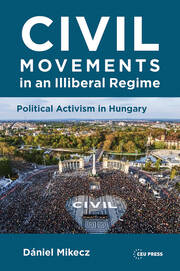
In this study, Daniel Mikic examines the tensions between opposition civil society organizations and partisan political actors. As Viktor Orbán's illiberal regime grew more confident in successive elections, left-wing and liberal opposition parties faced a long-term credibility crisis. At the same time, civil society did not stand still; grassroots initiatives, social and political movements, and NGOs gained momentum in the public sphere. The ruling authority is also active in the political arena outside parliament. Through national consultations, peace marches and other means, Orbán's ruling Fidesz party mobilized voters outside of election campaigns and implemented so-called “movement rule.” The study provides a precise analysis of this top-down mobilization, or what is known as the artificial mobilization of the regime. Mikecic identifies different activity patterns and creates a coherent classification for them. It describes each type of activism in detail based on opinion polls, protest surveys, and content analysis. This classification and comprehensive exploration of civil movements provides a deep understanding of the mechanisms of post-communist illiberal regimes.
Bibliographic Data
| Publisher | Amsterdam University PressWebsite |
|---|---|
| Publisher Address | info@aup.nl |
| Country | Netherlands |
| Also In | |
| Language | Arabic (AR) |
| Translation | Translated |