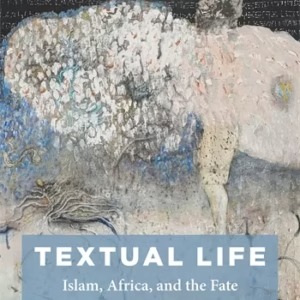
الحياة النصية .. الإسلام، أفريقيا، ومصير العلوم الإنسانية
الحياة النصية .. الإسلام، أفريقيا، ومصير العلوم الإنسانية
Textual Life is a pioneering book that reframes the role of knowledge in nation-building in the colonial era and beyond. The book presents a new historical literary and intellectual approach to the study of Islam in Africa. Senegalese Muslim scholar Sheikh Musa Camara (1864-1945) wrote Black History, a monumental history of West Africa, at a time when colonial discourses claimed that Africans lacked writing and history. Camara sought to publish a bilingual (Arabic and French) version of the book in collaboration with humanities scholars in colonial institutions, but the project ultimately failed due to the neglect of the French state. Textual Life examines Camara's story as an allegory about the fate of the humanities in light of cognitive and technological changes. Wendel H. argues Marsh argues that Camara's studies reflected what he calls the "textual stance," an orientation toward the world mediated by reading. Colonial humanists shared this attitude even as they adhered to racial and religious hierarchies, and showed an interest in African texts and traditions. But the bureaucrats and technologists who succeeded them despised this dialogue, for reasons that closely resemble today's algorithmic anti-humanism. Drawing on Camara's work, colonial archival documents, and postcolonial knowledge production in Senegal, Textual Lives offers a decolonized vision of the humanities. By engaging with African and Islamic intellectual resources, Marsh shows how thinkers like Kamara, who were colonized, can help us create a post-imperial future.
Bibliographic Data
| Publisher | Columbia University Press |
|---|---|
| Publisher Address | ips@ingramcontent.com |
| Country | USA |
| Also In | |
| Language | Arabic (AR) |
| Translation | Translated |
| Keywords | إفريقياالإسلام |