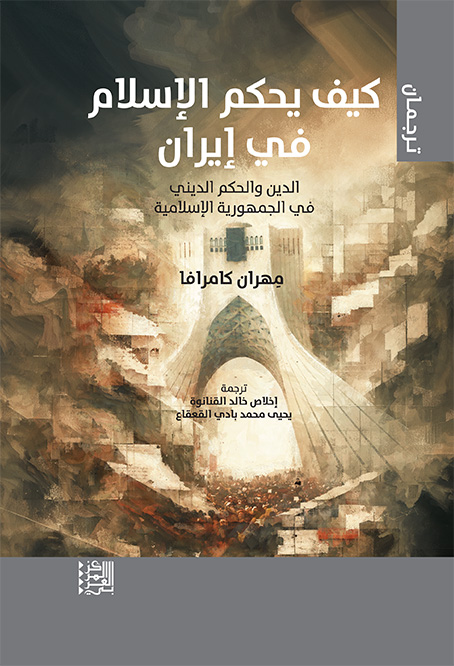
How Islam Rules in Iran Theology and Theocracy in the Islamic Republic
كيف يحكم الإسلام في إيران : الدين والحكم الديني في الجمهورية الإسلامية
How Islam Rules in Iran: Religion and Religious Rule in the Islamic Republic Published by the Arab Center for Research and Policy Studies The book How Islam Rules in Iran: Religion and Religious Rule in the Islamic Republic How Islam Rules in Iran: Theology and Theocracy in the Islamic Republic is part of the Tarjuman series, written by Mehran Kamrava. ## The intersection of religion and politics in the Iranian system of government The book reviews the intersection of religion and politics in the Iranian system of government during the period following the Islamic Revolution in Iran in 1979. It explains how the principle of guardianship of the jurist is used to legitimize power, and how laws and policies are shaped based on religious jurisprudential interpretations. It delves into this, through clear analysis and detailed historical context. It seeks to help the reader and those interested in Iranian affairs understand the role of Islam in managing the affairs of the Iranian state, and the extent of its influence within Iran and in the world as a whole. ## Religious Doctrine, Authority, and Governance This book provides us, in light of the ongoing ambiguity and controversy surrounding the nature of governance in Iran, with a solid analytical study on how to use religious doctrine, especially the principle of guardianship of the jurist, in building power and governance, and developing their tools, as well as managing society, directing internal and external policies, and the resulting challenges facing the Iranian political system internally and externally. ## Inventing the concept of “Khameneiism.” The importance of the book comes from its deep connection between religion and politics together in the last twenty years of the rule of the late Supreme Leader of the Islamic Revolution, Ali Khamenei. This is because there are few political studies that have dealt with the Iranian situation, and they focus in their entirety on the period immediately following the Iranian Islamic Revolution. This deep analysis resulted in the creation of the concept of “Khameneiism”, in a serious intellectual and cognitive contribution, similar to “Khomeiniism”, a concept introduced to Iranian studies in the period following Ayatollah Khomeini assuming the position of Supreme Leader in Iran. This book - unlike what is prevalent in other similar works - is distinguished by its methodological depth. The author resorted to using primary sources written in Persian, and translated most of the texts and evidence himself, and did not rely on studies written in other languages or secondary sources, except in rare cases, giving the book great accuracy and depth. In its other methodological aspect, it relied on an analytical study of interviews and field research produced by local Iranian institutions. What gave his study a unique credibility. ## The thorny relationship between the religious institution and the political institutions. The book highlights in a striking way the thorny relationship between the religious institution (jurists, religious authorities, and seminaries) and the political institutions in Iran (the presidency, the parliament, and the Revolutionary Guards); This relationship represents a unique and complex model of the system of “religious-political rule” that combines religious authority on the one hand and “contemporary civil” rule on the other hand, and the limits and frameworks of religious legitimate authority, in addition to models of religious rule, and the approach followed in building states after revolutions, religious ones in particular.