At Home: Ahmed Aboutaleb's Extraordinary Life, from His Youth in Morocco to Mayor of Rotterdam
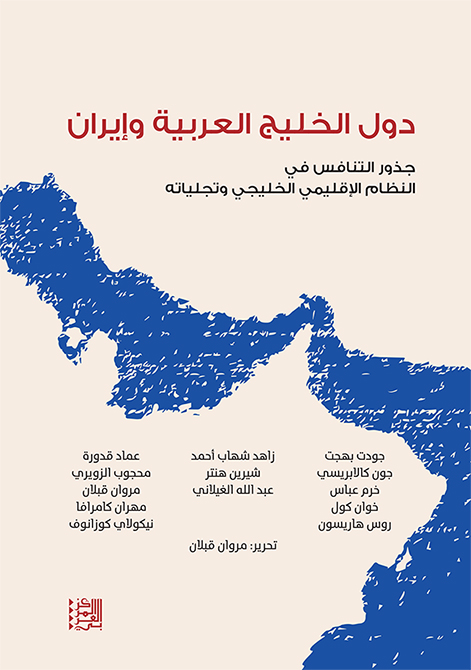
دول الخليج العربية وإيران .. جذور التنافس في النظام الإقليمي الخليجي وتجلياته
The Arab Gulf States and Iran... The Roots of Rivalry in the Gulf Regional System and Its Manifestations The Arab Center for Research and Policy Studies published the book The Arab Gulf States and Iran: The Roots of Rivalry in the Regional System The Gulf and its Manifestations This book includes thirteen studies, all of which revolve around the subject of the relationship of the Arab Gulf states with Iran, by thirteen researchers. Among them are Arabs, and foreigners of American, Pakistani, Iranian, and Russian nationalities, specializing in the fields of energy security, weapons of mass destruction, counter-terrorism, the Arab-Israeli conflict, American foreign policy, Asian-Middle Eastern relations, geopolitics, Pakistani relations with the Gulf states, China, and India, Middle Eastern studies, democratization, tyranny, political Islam, relations between the Middle East and South Asian countries, Islamic-Christian relations, and Islamic political thought. Gulf strategic affairs, geopolitics, Turkish studies, US-Iranian relations, international cooperation, the geopolitics of energy in the Arabian Gulf, Russian foreign policy in the Middle East, and the Iranian economy. Marwan Qablan edited the 416-page book, which includes a bibliography and a general index. In recent decades, the issue of Gulf-Iranian relations has occupied a very wide area of interest among scholars and those interested in the affairs of the region, and has become one of the most thorny and controversial topics after it transcended the issue of the existence of tense relations between two neighboring countries to the regional and international level. This is due to its connection to the policies of the great powers, especially the United States of America, on the one hand, and in view of the strategic challenge that Iran has come to represent to the Gulf states, on the other hand, following the swelling of its size and demographic weight, due to its revolutionary regime and its strategy of “exporting the revolution” to neighboring countries, and its foreign and regional policy based on interference in the affairs of others. The book approaches its topic in depth through its contributors’ open discussions of Gulf-Iranian relations in their historical and current dimensions, and by shedding light on the roots of the competition between them, the influence of internal, regional and international factors in fueling it, and the future of these relations in light of the major and accelerating changes in the regional and international systems. The view of the Iranian ruling elites in general (except during the era of the Shah, as a result of both sides’ affiliation to the same Western camp led by the United States during the Cold War period) did not waver for a long time regarding their country, as a large regional state with the right to dominate, enhance its power and control the water crossings in the Gulf region and West Asia, and as a reference state for the world’s Shiites with the right to build cross-border relations with the Shiite components scattered in its surroundings, which represents a challenge to the Arab Gulf states. and its local communities, in addition to an arrogant outlook linked to nationalist sentiments that see Iran as a superpower in terms of size, wealth, and civilization.