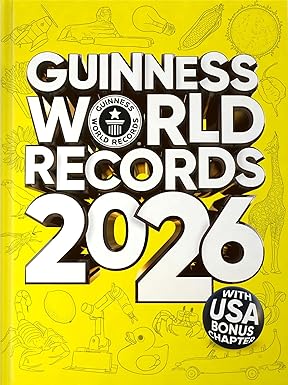
Guinness World Records
Guinness World Records - formerly the Guinness Book of World Records - is the official reference for evaluating and recording world records. It began as an idea to create a book containing reference facts to resolve controversial disputes in gatherings. The idea for a Guinness World Record began in the early 1950s, when Sir Hugh Beaver (1890-1967), CEO of the Guinness Brewery, attended a shooting and hunting event in County Wexford. During the ceremony, a controversial discussion took place between Sir Hugh and his hosts about the fastest bird in the continent of Europe, and this discussion did not reach a final answer from any reference book to confirm the answer. In 1954, when Sir Hugh remembered the controversy that had occurred, he had the idea of launching an advertisement for Guinness based on resolving controversial discussions that occur in pubs. He invited the twins Norris McQuaiter (1925-2004) and his brother Ross McQuaiter (1925-1975) - researchers and fact-gatherers who live on Fleet Street - and asked them to compile a book that included all kinds of information and figures. Guinness Superlatives was established on November 30 of that year. The office was two rooms in a gymnasium on the top floor of the Ludgate House, Unit 107, Fleet Street. After the initial research process, the project began to work on drafting the Guinness Book of Records, which took about 13 and a half weeks (90 hours of work during one week), including weekends and national holidays. During that time, the McQuaiter brothers did not know that the book would achieve the tremendous success that we witness today and the trust that this brand has enjoyed to this day.
About the Publisher
Guinness World Records
Guinness World Records - formerly the Guinness Book of World Records - is the official reference for evaluating and recording world records. It began as an idea to create a book containing reference facts to resolve controversial disputes in gatherings. The idea for a Guinness World Record began in the early 1950s, when Sir Hugh Beaver (1890-1967), CEO of the Guinness Brewery, attended a shooting and hunting event in County Wexford. During the ceremony, a controversial discussion took place between Sir Hugh and his hosts about the fastest bird in the continent of Europe, and this discussion did not reach a final answer from any reference book to confirm the answer. In 1954, when Sir Hugh remembered the controversy that had occurred, he had the idea of launching an advertisement for Guinness based on resolving controversial discussions that occur in pubs. He invited the twins Norris McQuaiter (1925-2004) and his brother Ross McQuaiter (1925-1975) - researchers and fact-gatherers who live on Fleet Street - and asked them to compile a book that included all kinds of information and figures. Guinness Superlatives was established on November 30 of that year. The office was two rooms in a gymnasium on the top floor of the Ludgate House, Unit 107, Fleet Street. After the initial research process, the project began to work on drafting the Guinness Book of Records, which took about 13 and a half weeks (90 hours of work during one week), including weekends and national holidays. During that time, the McQuaiter brothers did not know that the book would achieve the tremendous success that we witness today and the trust that this brand has enjoyed to this day.