قرن من الفوضى؟
قرن من الفوضى؟
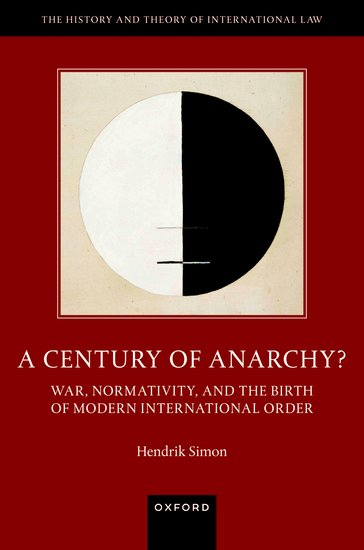
The nineteenth century is understood as an era in which states could wage wars against each other if they deemed it politically necessary. According to this account, the "free right to wage war" (_liberum ius ad bellum_) was only gradually prohibited with the founding of the League of Nations, the Kellogg-Briand Pact, and the Charter of the United Nations. Better days dawned as the chaos of waging war ended, leading to radical transformations in international law and politics. However, because the “free right to wage war” has not been empirically proven, this account of progress is puzzling. In A Century of Chaos?: War, Normativity, and the Birth of the Modern International Order, Hendrik Simon refutes this narrative by presenting a history of modern justifications for war, drawing on scholarly, political, and public discourses. Simon argues that the principle of "freedom to resort to war" (liberum ius ad bellum) was an invention of realist jurists in imperial Germany, who opposed mainstream European liberalism, and that, ironically, the now-forgotten reading of the "private way" (Sonderweg) spread into international history writings after the two world wars. “A Century of Chaos?” is an interesting read for historians, jurists, political theorists, international relations scholars, and anyone interested in understanding the emergence of the modern international order. In this pioneering work, Simon not only brilliantly deconstructs the myth of “the freedom to resort to war,” but also traces the political and theoretical roots of the modern prohibition of war back to the long nineteenth century (1789-1918).
Bibliographic Data
| Publisher | Oxford University Press واحدة من أقوى دور النشر في العالم |
|---|---|
| Publisher Address | info@global.com |
| Country | USA |
| Primary Category | Ideas and Policies |
| Also In | |
| Language | Arabic (AR) |
| Translation | Translated |
| Keywords | قرن |