الصفقة المدنية: كيف تبقى الديمقراطية
الصفقة المدنية: كيف تبقى الديمقراطية
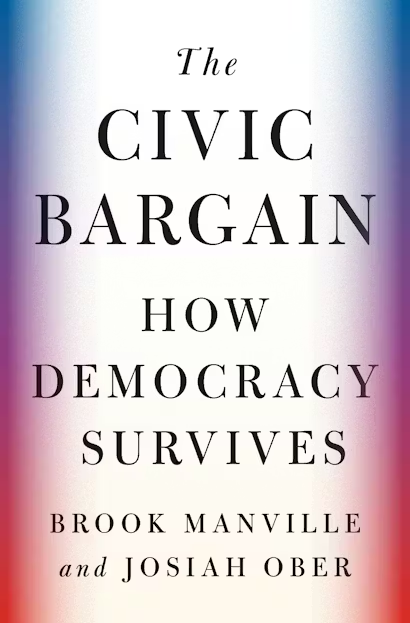
Is democracy in danger, perhaps dying? Analysts say so, and polls indicate that most Americans believe their country's system of government is being "tested" or "under attack." But is the future of democracy so bleak? In The Civil Deal, Brooke Manville and Josiah Ober debunk the prevailing pessimism about the fate of democracy around the world. Instead of lamenting democracy, they offer a guide to its renewal, calling on citizens to recommit to a “civil bargain” among themselves to guarantee the civil rights of freedom, equality, and dignity. This bargain also requires them to fulfill the duties of democratic citizenship: governing themselves with no “boss” but each other, embracing consensus, treating each other as civic friends, and investing in the civic education of each rising generation. Manville and Ober trace the long path to self-government through four key moments in the history of democracy: classical Athens, republican Rome, constitutional monarchy in Great Britain, and the founding of the United States of America. By comparing what worked and what failed in each case, the authors draw lessons about how modern democracies survive and thrive. Manville and Uber show that democracy is not about getting everything we want, but rather about agreeing on a common framework for achieving our often conflicting goals. It is crucial that citizens are able to reach compromises and not treat each other as political enemies. We must accept imperfection; Democracy never ends, but constantly develops and renews itself. As long as the civil compact is preserved—through deliberation, negotiation, and compromise—democracy will endure.
Bibliographic Data
| Publisher | Island PressWebsite |
|---|---|
| Publisher Address | info@press.princeton.edu |
| Country | USA |
| Primary Category | Ideas and Policies |
| Language | Arabic (AR) |
| Translation | Translated |