الخيال السياسي.. من العصور الوسطى إلى عصر ما بعد الحقيقة
الخيال السياسي.. من العصور الوسطى إلى عصر ما بعد الحقيقة
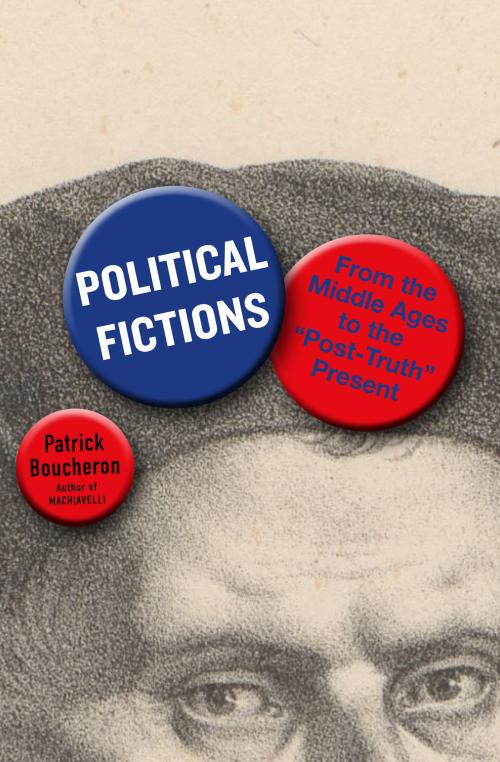
The book Political Fiction...from the Middle Ages to the Post-Truth Era by the French historian Patrick Boucheron provides a deep historical reading to understand contemporary politics by tracing the relationship between governance and storytelling over long centuries, from the Middle Ages all the way to what is known today as the “post-truth” era. The book is based on the central premise that politics has never been merely about managing power or making decisions, but rather has always been linked to creating the “story” that justifies governance and gives it legitimacy in the eyes of the people. Boucheron confirms that the ruler, since ancient times, has not been satisfied with force or law, but rather needs to build a narrative that convinces the ruled and reshapes their perception of reality. The book comes in a highly sensitive contemporary context, as Boucheron’s original lectures were linked to the rise of global populism, especially after the election of Donald Trump in the United States, where political discourses became increasingly dependent on symbols, simplified stories, and the manufacture of “alternative reality” instead of complex facts. The author links this modern reality to major classic texts in political thought, such as Machiavelli's The Prince and Hobbes's Leviathan, to modern literary and political works such as George Orwell's novel 1984 and the writings of Nazi jurist Carl Schmitt. Through this historical extension, he demonstrates that political imagination is not a modern phenomenon, but rather an element inherent in understanding power for centuries. The book raises a fundamental question about the difference between “politics” and “the political,” as Boucheron points out that politics as a practice may differ from “the political” as a symbolic and discursive construct used to interpret and reshape the world. This tension between reality and narrative is what defines the form of governance in every era. The book also discusses how political discourses in the modern era have turned into forms of “public drama”, where the media and modern means of communication are used to condense political messages into easily circulated images and slogans, which makes the audience more susceptible to emotional influence and less connected to critical analysis. The work also highlights an important analysis of the concept of “post-truth,” where the truth itself becomes less important than the extent of the influence and spread of the political narrative. In this context, politics becomes closer to producing competing narratives, rather than to a rational debate based on facts. Ultimately, Boucheron offers a critical reading of a long history of the intersection of power and imagination, stressing that understanding the present cannot be done without returning to the roots of this intersection throughout history. Therefore, the book does not limit itself to analyzing the current political moment, but rather places it within an extended historical context that reveals that what we are experiencing today is an extension of ancient transformations in the way governance is made and justified. Thus, the book is an important addition to understanding contemporary political transformations, especially in light of the rise of populism and the decline in confidence in facts, as it raises a crucial question: Is politics still searching for the truth, or has it become just a story that is told and believed?
Bibliographic Data
| Publisher | Other PressWebsite |
|---|---|
| Publisher Address | editor@otherpress.com |
| Country | USA |
| Primary Category | Ideas and Policies |
| Language | Arabic (AR) |
| Translation | Translated |