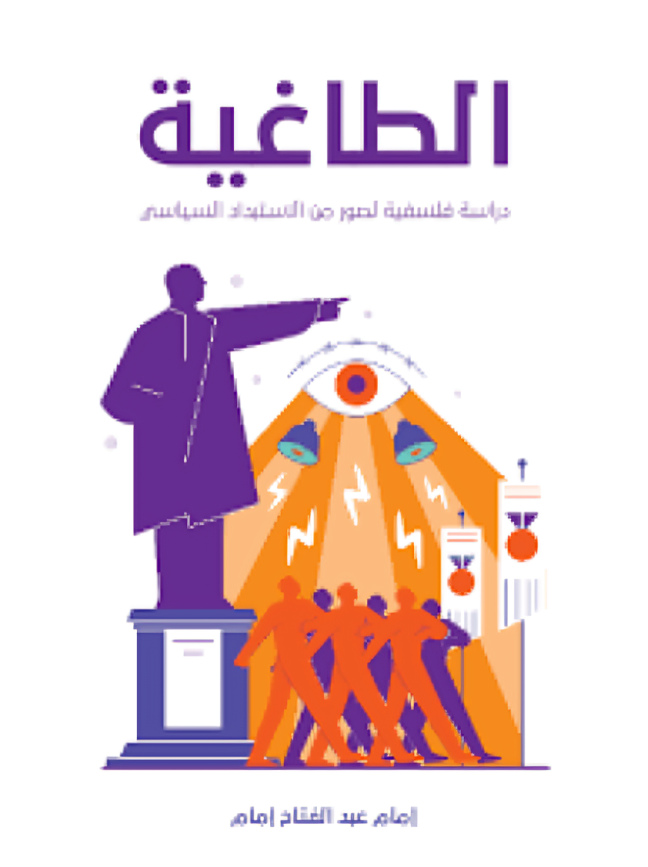
الطاغية: دراسة فلسفية لصور من الاستبداد السياسي
الطاغية: دراسة فلسفية لصور من الاستبداد السياسي
“The position of a tyrant is the position of one who cuts down a tree in order to pick its fruit.” The poet says that no tyrant passed through a garden fence without the roses dying in his sleeve, and the philosopher says: All authority corrupts, and absolute authority corrupts absolutely. In this book, which includes a philosophical and psychological study of tyranny, Dr. Imam Abdel Fattah says a lot about the various forms of political tyranny in various historical stages starting from Plato until the twentieth century, and in more than one location in world geography, discussing many systems of governance in Eastern society, and shedding light on the combination of religion and governance in Eastern and Western societies, highlighting many models of tyrants throughout. History, studying their psychological and mental conditions, and analyzing the idea of the just tyrant and how it moved from the West to the East, and how some Renaissance figures such as Jamal al-Din al-Afghani viewed it, taking the careful application of democracy as an effective treatment for all forms of tyranny and reactionism.
Bibliographic Data
| Publisher | Hindawi Foundation for Education and Culture |
|---|---|
| Publisher Address | hindawi@hindawi.org |
| Country | Egypt |
| Primary Category | Ideas and Policies |
| Language | Arabic (AR) |
| Translation | Translated |