عمليات التطهير: كيف يقاتل المستبدون من أجل البقاء
عمليات التطهير: كيف يقاتل المستبدون من أجل البقاء
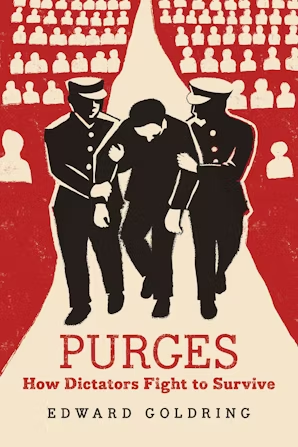
"Purges" addresses one of the main tactics autocrats use to maintain power: removing individuals from within the system. Like Kim Jong Un's execution of his uncle, purges have dire consequences for the survival of autocrats and their continued rule. However, much remains unknown about why dictators resort to purges, and whether they achieve their desired goals. Drawing on an original global dataset on purges of civilian and military elites in dictatorial regimes, as well as case studies including North and South Korea, among others, Edward Golding examines the logic behind purges and their consequences. It shows that dictators resort to purges to consolidate their power, punish betrayal, and scapegoat elites to mitigate popular threats. But even as purges help dictators consolidate their power early in their rule, they actually weaken their position when they remain in power longer, provoking negative reactions. As the world increasingly shifts toward authoritarian norms, Purges offers insight into how authoritarian rulers retain power, and sometimes lose it.
Bibliographic Data
| Publisher | Cornell University PressWebsite |
|---|---|
| Publisher Address | ' cupress@cornell.edu |
| Country | USA |
| Primary Category | Ideas and Policies |
| Language | Arabic (AR) |
| Translation | Translated |