حرب نيكسون في الداخل
حرب نيكسون في الداخل
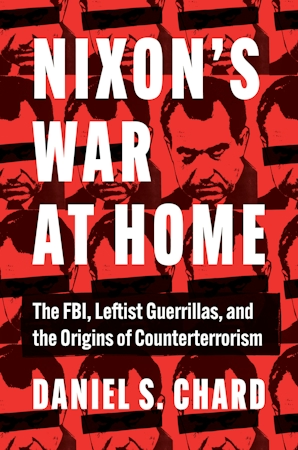
During Richard Nixon's presidency, domestic leftist guerrilla groups, such as the Weather Underground and the Black Liberation Army, carried out hundreds of attacks in the United States. The FBI had a long history of infiltrating activist groups, but this type of undercover operation posed a unique challenge. Drawing on thousands of pages of declassified FBI documents, Daniel S. She recounts how America's war with local guerrilla groups prompted a host of new policing procedures, as the FBI revived illegal espionage tactics previously used against communists in the name of counter-terrorism. These efforts did little to stop the guerrilla groups, but led to a bureaucratic struggle between the Nixon administration and the FBI, which fueled the Watergate scandal and brought down Nixon. However, despite their internal struggles, FBI and White House officials have developed proactive surveillance practices that will influence American counterterrorism strategies in the twenty-first century, establishing mass surveillance as a cornerstone of the national security state. By connecting the dots between political violence and “law and order” politics, Chard reveals how American counterterrorism in the 1970s arose from violent struggles over racism and
Bibliographic Data
| Publisher | University of North Carolina Press |
|---|---|
| Publisher Address | info@uncpress.org |
| Country | USA |
| Primary Category | Ideas and Policies |
| Language | Arabic (AR) |
| Translation | Translated |