ملك الملوك .. الثورة الإيرانية: قصة الغطرسة والوهم وسوء التقدير الكارثي
ملك الملوك .. الثورة الإيرانية: قصة الغطرسة والوهم وسوء التقدير الكارثي
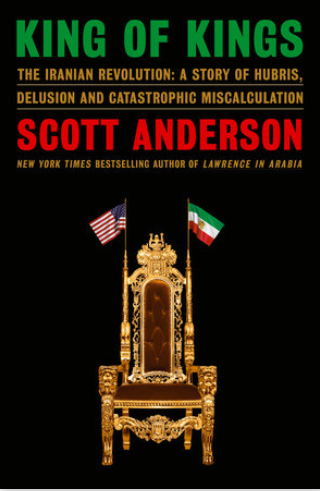
Book Description A New York Times Notable Book • A New York Times Bestseller • A Kirkus Prize Winner • From the acclaimed author of Lawrence of Arabia comes this stunning historical account of the Iranian Revolution, one of the most important events of the modern era. This groundbreaking work exposes the astonishing stupidity of the American government and traces the rise of religious nationalism, offering essential insights into today's global turmoil. “A masterful and engaging narrative that chronicles a series of devastating and transformative events whose effects continue to reverberate to this day.” - 2025 Kirkus Prize Jury. “An exceptional and important book. Rarely have careful and innovative reporting combined with such a fascinating narrative.” -New York Times Book Review. "A brilliant and engaging narrative. Anderson presents us with an interesting and tireless history lesson that is more important than ever." —Rajeev Chandrasekaran, author of National Book Award-nominated Imperial Life in the Emerald City. On New Year's Eve 1977, during a state visit to Iran, President Jimmy Carter raised a toast to Shah Mohammad Reza Pahlavi, King of Kings, Light of the Aryans, God's Shadow on Earth, praising Iran as an “island of stability” thanks to “your leadership and the respect, admiration and love that your people have for you.” Iran had the fifth largest army in the world and billions of dollars in oil revenues. Construction cranes filled the skyline of its thriving capital, Tehran. The regime's secret security service, SAVAK, crushed the communist opposition, and the Shah bought off conservative Muslim clerics inside the country. He seemed invincible, and of inestimable value to the United States as a Cold War ally. Fourteen months later, the Shah fled Iran into exile, forced to abdicate by a violent religious revolution led by a radical cleric named Ayatollah Khomeini. The subsequent hostage crisis severely damaged America's standing in the world. How could the United States, which has one of the largest CIA stations in the world and thousands of military personnel in Iran, be so oblivious? Scott Anderson tells the gripping story of a dictator oblivious to his subjects' discontent, and a superpower spiraling into disaster. Scott Anderson tells this astonishing tale with the masterful narrative style, acerbic wit, and meticulous analysis that made his novel Lawrence of Arabia a bestseller. This book is considered one of the most important texts for understanding the modern Middle East. Anderson presents a convincing argument that the Iranian Revolution was a world-shaking event, no less influential than the French and Russian Revolutions. In the Middle East, India, Southeast Asia, Europe, and now the United States, the hatred of economically marginalized and religiously devout masses for the wealthy secular elite has led to violence and unrest, with Iran being the model. King of Kings is both a fascinating work of history and a cautionary message.
Bibliographic Data
| Publisher | Knopf DoubledayWebsite |
|---|---|
| Publisher Address | knopfpublicity@penguinrandomhouse.com |
| Country | USA |
| Primary Category | Ideas and Policies |
| Also In | |
| Language | Arabic (AR) |
| Translation | Translated |
| Keywords | الثورة الإيرانية |