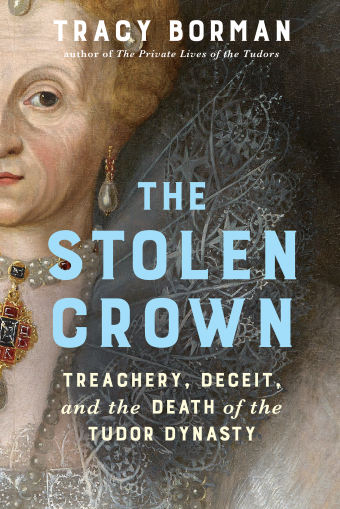
التاج المسروق .. الخيانة والخداع وموت سلالة تيودور
التاج المسروق .. الخيانة والخداع وموت سلالة تيودور
In the long and eventful annals of British history, never has British history witnessed a transition from one monarch to another with such difficulties and grave repercussions as it ended the Tudor dynasty and launched the Stuart dynasty in March 1603. At the time of her death, Elizabeth I had reigned for 44 turbulent years, during which she faced numerous threats, both external from Spain and internal from her cousin Mary, Queen of Scots. But no danger was greater than the uncertainty over who would succeed her, which grew more acute as her reign increased. Her refusal to marry or name a successor led to a fierce rivalry between blood claimants to the throne - Mary and her son James VI of Scotland, Arbella Stuart, Lady Katherine Grey, Henry Hastings, and others - which threatened to destabilize the monarchy. As the respected historian of the Tudor era, Tracey Borman, reveals in her book The Stolen Crown, according to Elizabeth's earliest biographer, William Camden, in chronicling her reign, the queen indicated on her deathbed that James was her chosen heir, and indeed he became king soon after her death. This approval has been considered a fact for more than four centuries. However, a recent analysis of Camden's original manuscript shows that key passages were redacted and rewritten to polish James's image. The newly discovered pages make clear not only that Elizabeth's naming of James never occurred, but that James, unsure of his claim to the British throne, was even under suspicion of sending an assassin to London to assassinate the Queen. If all this had been known at the time, the English people – sworn enemies of Scotland for centuries – might not have accepted James as their king, with disastrous consequences. Drawing on the discoveries uncovered by the Camden Manuscript, Boorman sheds rare new light on Elizabeth's historic reign, chronicling it through the lens of the various claimants who, over decades, sought the throne of the only English queen whose succession was not stipulated. The consequences were dire. Not only did James turn Elizabeth's glittering court upside down, but the illegitimacy of his claim to the throne, which Camden had suppressed, was clearly demonstrated during the disastrous reign of his son and successor, Charles I. His execution in 1649 shocked the world, ending the monarchy less than 50 years after Elizabeth's death, changing the course of British and world history.
Bibliographic Data
| Publisher | Grove AtlanticWebsite |
|---|---|
| Publisher Address | info@groveatlantic.com |
| Country | USA |
| Primary Category | Ideas and Policies |
| Language | Arabic (AR) |
| Translation | Translated |
| Keywords | التاج المسروقتريسي بورمان |