التنمية الاقتصادية في الصين .. التفاعل بين الندرة والأيديولوجيا
التنمية الاقتصادية في الصين .. التفاعل بين الندرة والأيديولوجيا
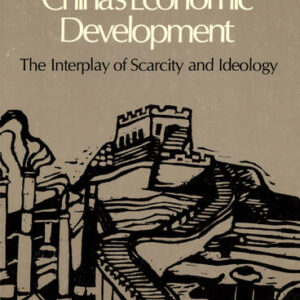
The book "Economic Development in China: The Interaction of Scarcity and Ideology" by Alexander Eckstein provides a comprehensive analysis of China's economic growth and its transition from a socialist economy. Eckstein addresses the unique challenges China has faced in addressing its economic backwardness, such as resource scarcity and ideological constraints, and compares its industrialization with that of other countries. The book explores how Maoist ideology and its political initiatives influenced the country's economic strategies, leading to a volatile development pattern marked by rapid expansion in the 1950s and stagnation in the 1960s. Key themes include the dualism of scarcity and ideology, the influence of historical factors on economic structures, and adaptation to Soviet models. Eckstein highlights how China deals with its unique size, population pressures, and low per capita income, emphasizing that understanding these dynamics is crucial to development theory and policy design. This volume, part of the Michigan China Studies Series, brings together articles and research that contribute to a nuanced understanding of China's economic systems, with a particular focus on the tensions between ideological aspirations and economic reality.
Bibliographic Data
| Publisher | University of Michigan PressWebsite |
|---|---|
| Publisher Address | press.umich.edu Ann Arbor, Michigan, USA. 839 Greene Street, MI 48104-3209, um.press.perms@umich.edu. |
| Country | USA |
| Also In | |
| Language | Arabic (AR) |
| Translation | Translated |
| Keywords | التنمية الاقتصادية في الصينالصين |